Thymelaeaceae
Daphne Family / Mezereum Family / Agarwood Family
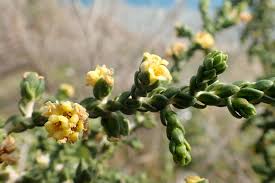
Thymelaeaceae is a family of flowering plants in the order Malvales, comprising about 50 genera and 750-900 species. Members are mostly trees and shrubs (some lianas, rarely herbs) found nearly worldwide, with greatest diversity in tropical/subtropical Africa and Australia. The family is known for its tough, fibrous bark, often fragrant flowers featuring a prominent hypanthium (floral tube), and the economic importance of some species for producing agarwood (oud), timber (Ramin), paper fibre, and ornamentals. Many species are also notably poisonous.
Overview
The Thymelaeaceae family is widespread across the globe, inhabiting diverse environments from tropical rainforests to temperate woodlands and arid regions. A characteristic feature of many species is their exceptionally tough, fibrous bark, which can often be peeled off in long strips and has been traditionally used for making rope or cloth. Another defining feature is the flower structure, which typically possesses a well-developed floral tube (hypanthium) formed from the fusion of basal floral parts, topped by petal-like sepals. True petals are often absent or reduced.
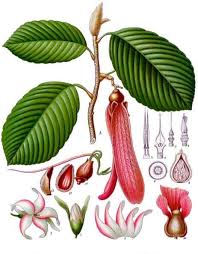
Several genera hold significant economic value. Aquilaria and Gyrinops species produce highly prized agarwood (oud), a resinous heartwood used for incense and perfume, formed in response to fungal infection. Gonystylus provides Ramin, an internationally traded light hardwood (though trade is now restricted due to overharvesting). Edgeworthia and related genera are sources of high-quality fibre used for traditional papermaking in Asia. Many Daphne and Pimelea species are cultivated as ornamentals for their often fragrant and attractive flowers.
It is important to note that many members of the Thymelaeaceae family are poisonous if ingested, containing toxins like mezerein and daphnetoxin. This applies to berries, leaves, and bark of various species, including popular garden plants like Daphne.
Quick Facts
- Scientific Name: Thymelaeaceae
- Common Name: Daphne family, Mezereum family, Agarwood family
- Number of Genera: Approximately 50
- Number of Species: Approximately 750-900
- Distribution: Nearly cosmopolitan, most diverse in Africa and Australia; present in tropical, subtropical, and temperate regions.
- Evolutionary Group: Eudicots - Rosids - Malvids - Malvales
Key Characteristics
Growth Form and Habit
Mostly trees and shrubs, some lianas (woody vines), rarely perennial or annual herbs. A characteristic feature is the tough, fibrous bark that is difficult to tear.
Leaves
Leaves are typically simple, usually alternate and spirally arranged, but sometimes opposite. Margins are always entire (smooth, not toothed). Leaves are often leathery and typically lack stipules (exstipulate).
Inflorescence and Flowers
Inflorescences are variable, including terminal or axillary clusters, racemes, heads, or umbels; flowers are sometimes solitary. Flowers are usually bisexual (sometimes unisexual with plants dioecious or monoecious) and typically radially symmetrical (actinomorphic).
A key feature is the prominent hypanthium: a floral tube formed by the fused bases of the sepals, petals (if present), and stamens. This tube is often elongated, tubular or funnel-shaped, and frequently petal-like (colored and attractive).
- Calyx: Usually 4 or 5 sepals (calyx lobes) attached to the rim of the hypanthium. These sepals are often petaloid (resembling petals in color and texture).
- Corolla: True petals are frequently absent. When present, they are usually small, scale-like, often 4, 5, 8, or 10, inserted inside the mouth of the hypanthium, alternating with the calyx lobes.
- Androecium: Stamens are typically inserted on the inner surface of the hypanthium tube, often in two whorls. The number is commonly twice the number of sepals (e.g., 8 stamens if 4 sepals) or sometimes equal to the number of sepals (e.g., 4 or 5). Filaments are usually short.
- Gynoecium: The ovary is superior but located at the base of the hypanthium tube (appearing inferior). It is composed of 2 to many fused carpels (commonly 2), but often functionally reduced to a single chamber (locule) containing only one (rarely two) pendulous ovule. A single style arises from the ovary, varying in length.
Fruits and Seeds
The fruit is most commonly a drupe (a fleshy fruit with a single hard seed, like a cherry) or a dry, indehiscent, single-seeded nut or achene. Less frequently, the fruit is a capsule. The fruit often develops within or is subtended by the persistent base of the hypanthium.
Seeds usually contain little or no endosperm; the embryo is typically straight and oily.
Field Identification
Identifying Thymelaeaceae often involves looking for the unique floral structure and characteristic bark, combined with leaf arrangement:
Primary Identification Features
- Prominent Hypanthium: Look for flowers with a distinct floral tube below the apparent "petals" (which are usually petaloid sepals).
- 4 or 5 Petaloid Sepals: The colorful lobes at the top of the hypanthium are typically sepals.
- Petals Absent or Small/Scale-like: True petals inside the hypanthium mouth are often missing or inconspicuous.
- Tough, Fibrous Bark: Difficult to tear, often peels in strips (use caution - many are irritants/poisonous).
- Simple, Alternate, Entire Leaves: Smooth-edged leaves, usually arranged alternately (check carefully, some are opposite).
- Superior Ovary at Base of Hypanthium: Dissecting a flower reveals the ovary positioned low within the floral tube.
- Fruit a Drupe or Nut: Small, often single-seeded fleshy or dry fruits are common.
Secondary Identification Features
- Lack of Stipules: Leaves attach directly to the stem without small appendages at the base.
- Stamens Attached Inside Hypanthium: Not directly visible without looking inside the floral tube.
- Often Fragrant Flowers: Many species, especially Daphne, are known for their strong fragrance.
- Habitat and Distribution: Consider the typical habitats and global distribution patterns.
Seasonal Identification Tips
- Flowering Season: Varies greatly by species and climate; many bloom in spring, but others flower at different times.
- Fruiting Season: Drupes or nuts mature after flowering.
- Vegetative State: Fibrous bark and leaf arrangement (alternate, entire, exstipulate) are useful year-round clues.
Common Confusion Points
- Some Nyctaginaceae (Four O'Clock Family): Can have tubular flowers with colorful bracts or calyx lobes appearing petal-like, but ovary structure and fruit types differ.
- Some Proteaceae: Flowers can be tubular or clustered, but floral structure is very different (e.g., 4 tepals, 4 stamens often adnate to tepals, superior ovary without prominent hypanthium). Often have unique leaf shapes or textures.
- Some Santalales (e.g., Santalaceae - Sandalwood Family): Can have small flowers with a perianth tube, but many are parasitic/hemiparasitic, and floral details (ovary position, stamen number/placement) differ.
- Ericaceae (Heath Family): Some have tubular flowers (fused petals), but lack the distinct hypanthium structure of Thymelaeaceae, and leaves are often smaller or needle-like.
Field Guide Quick Reference
Look For:
- Trees/shrubs with fibrous bark
- Simple, alternate (usually), entire leaves
- No stipules
- Flowers with tubular hypanthium
- 4-5 petaloid sepals at top of tube
- Petals often absent/small
- Stamens inside hypanthium
- Fruit usually a drupe or nut
Key Distinctions:
- Hypanthium structure is key.
- Petaloid sepals + absent/small petals is common.
- Fibrous bark is characteristic.
- Fruit type (drupe/nut) helps.
Notable Examples
Thymelaeaceae includes species valued for fragrance, fibre, timber, and traditional uses:

Daphne mezereum
Mezereon, February Daphne
A deciduous shrub native to Europe and Western Asia, known for its highly fragrant pink or lilac flowers borne on bare stems in late winter/early spring, followed by poisonous red berries. Often cultivated as an ornamental.

Aquilaria malaccensis
Agarwood, Oud, Gaharu
A tree native to Southeast Asia, critically endangered due to overharvesting. When infected by a specific mold, the tree produces a dark, fragrant resinous heartwood (agarwood/oud), highly valued for incense, perfumes, and traditional medicine.

Edgeworthia chrysantha
Paperbush, Mitsumata
A deciduous shrub native to China and the Himalayas, cultivated ornamentally for its fragrant yellow flowers in dense heads appearing on bare stems in late winter. Its fibrous bark is traditionally used in Japan and China to make high-quality paper (Mitsumata paper).

Pimelea spectabilis
Bunjong, Rice Flower
An example from the large Australian genus Pimelea. This species from Western Australia is a shrub known for its showy, large, rounded heads of white or pink flowers, typical of many "Rice Flowers" cultivated for floristry or gardens.
Phylogeny and Classification
Thymelaeaceae is placed within the order Malvales, part of the large malvid clade within the rosids. This order includes well-known families like Malvaceae (mallows, cotton, hibiscus, cacao), Cistaceae (rockroses), Bixaceae (annatto), and Dipterocarpaceae (dominant trees in Asian rainforests).
Molecular studies confirm the monophyly of Thymelaeaceae and its placement within Malvales, often grouping it with families like Dipterocarpaceae or near the base of the broader Malvales clade. The family itself is often divided into subfamilies or tribes, reflecting the diversity in floral structure, fruit type, and geographic distribution among its genera (e.g., separating Gonystylus or Aquilaria lineages from the core Thymelaea/Daphne groups).
Position in Plant Phylogeny
- Kingdom: Plantae
- Clade: Angiosperms (Flowering plants)
- Clade: Eudicots
- Clade: Rosids
- Clade: Malvids
- Order: Malvales
- Family: Thymelaeaceae
Evolutionary Significance
Thymelaeaceae holds evolutionary interest due to:
- Unique Floral Structure: The prominent hypanthium combined with often petaloid sepals and reduced/absent petals represents a distinct floral morphology within Malvales.
- Chemical Diversity: Production of potent toxins (like phorbol esters) and valuable resins (agarwood) highlights significant biochemical evolution.
- Fibrous Bark: The development of extremely tough, fibrous bark is a notable structural adaptation.
- Biogeography: Its near-cosmopolitan distribution with centers of diversity suggests a complex history of diversification and dispersal across continents.
- Economic and Cultural Roles: The diverse uses (agarwood, paper, timber, ornamentals) demonstrate the family's long interaction with human societies.