Schisandraceae
Star Anise Family
The Schisandraceae is a fascinating family of basal angiosperms comprising aromatic woody vines, shrubs, and small trees. It includes well-known plants like star anise (Illicium verum) and magnolia vine (Schisandra chinensis). Characterized by simple, alternate leaves, often unisexual flowers with numerous, spirally arranged parts, and aggregate fruits, this family belongs to the ancient order Austrobaileyales.
Overview
Schisandraceae encompasses three distinct genera: Illicium (star anise and relatives), Schisandra, and Kadsura (both often called magnolia vines), totaling about 80-90 species. These plants are primarily distributed in tropical to temperate regions of Asia, with Illicium also having species native to the southeastern United States and the Caribbean. They are consistently woody, growing as lianas (vines), shrubs, or small trees, and are renowned for their aromatic properties due to abundant ethereal oils.
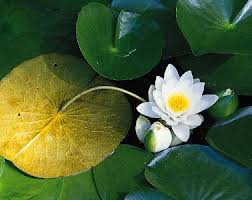
Phylogenetically, Schisandraceae holds a crucial position as part of the Austrobaileyales order, one of the three earliest diverging lineages of living flowering plants (alongside Amborellales and Nymphaeales). This ancient ancestry is reflected in floral characteristics often considered primitive, such as numerous, spirally arranged floral parts and separate carpels.
The family has significant economic and cultural importance. Illicium verum provides the spice star anise, widely used in cooking and traditional medicine. Schisandra chinensis berries (wu wei zi) are a vital component of traditional Chinese medicine, valued as an adaptogen. Several species from all three genera are also cultivated as ornamentals for their attractive foliage, flowers, or fruits.
Quick Facts
- Scientific Name: Schisandraceae
- Common Name: Star Anise family
- Number of Genera: 3 (Illicium, Kadsura, Schisandra)
- Number of Species: Approximately 80-90
- Distribution: Tropical to temperate Asia, SE North America, Caribbean
- Evolutionary Group: Basal Angiosperms - Austrobaileyales
Key Characteristics
Growth Form and Habit
Members are exclusively woody plants, manifesting as evergreen or deciduous vines (lianas), scandent or self-supporting shrubs, or small trees. A defining feature is their often strong aromatic nature in leaves, bark, flowers, and fruits, due to the presence of ethereal (essential) oils in spherical oil cells.
Leaves
Leaves are simple, alternate, and arranged spirally along the stem, though sometimes clustered near the tips of shoots. Leaf margins are typically entire (smooth) or occasionally slightly toothed (serrulate). Crucially, they lack stipules (exstipulate). Leaf texture varies from thin to leathery.
Inflorescence
Flowers are typically borne solitary in the axils of leaves or bracts, or sometimes in small axillary clusters (fascicles). They arise on distinct pedicels.
Flowers
Flowers exhibit features considered ancestral among angiosperms. They are typically unisexual (with male and female flowers on the same plant - monoecious, or different plants - dioecious), though rarely bisexual. Key floral features include:
- Symmetry: Radially symmetrical (actinomorphic).
- Perianth: Undifferentiated or weakly differentiated into tepals (no distinct sepals and petals). Tepals are numerous (usually 5 to many), spirally arranged or in indistinct whorls, often fleshy or somewhat thick, and variable in color (white, yellow, pink, red).
- Androecium (in male flowers): Stamens few to numerous (4 to ~80), spirally arranged or whorled on a convex or conical receptacle. Filaments are often short and thick, sometimes fused; anthers typically open via longitudinal slits.
- Gynoecium (in female flowers): Carpels few to numerous (5 to ~100 or more), distinct and free (apocarpous), spirally arranged on an elongated or conical receptacle. Each carpel is simple, containing one (rarely more) ovule, and typically has a sessile or short-styled stigma. The ovary is superior.
Fruits and Seeds
The fruit is an aggregate fruit, developing from the numerous free carpels of a single flower, arranged on the often elongated receptacle. Individual fruitlets are typically one-seeded (rarely two-seeded) and can be fleshy berries (in Schisandra and Kadsura, forming a spike-like or head-like cluster) or dry, dehiscent follicles (in Illicium, famously forming a star-shaped whorl). Seeds possess abundant oily endosperm and a very small embryo.
Chemical Characteristics
The family is characterized by the production of abundant ethereal oils (essential oils) located in spherical idioblasts throughout the plant, responsible for their strong aromas. Other significant compounds include various lignans (like schisandrin in Schisandra), sesquiterpenes, and other aromatic molecules, contributing to their use as spices and medicines.
Field Identification
Identifying members of the Schisandraceae relies on recognizing their woody habit, aromatic nature, and distinctive floral and fruit characteristics indicative of their basal lineage:
Primary Identification Features
- Habit: Identify them as woody plants – vines, shrubs, or small trees.
- Aroma: Crush leaves or twigs to detect a distinct, often strong, aromatic scent (anise, lemon, turpentine-like depending on species).
- Leaves: Look for simple, alternate leaves that lack stipules (check the base of the petiole and twig node).
- Flowers: Observe the typically unisexual flowers with numerous (often >6), spirally arranged tepals (not clearly differentiated sepals/petals). Note the numerous, spirally arranged stamens or carpels.
- Carpels/Pistils: Recognize the numerous, separate (apocarpous) pistils in female flowers.
- Fruit: Identify the aggregate fruit composed of multiple berries or follicles clustered on a receptacle. Look for the unique star-shaped aggregate of follicles in Illicium.
Secondary Identification Features
- Flower Position: Flowers typically solitary in leaf axils.
- Tepal Texture: Tepals often appear somewhat fleshy.
- Receptacle Shape: Receptacle holding stamens/carpels is often conical or elongated.
Seasonal Identification Tips
- Year-round: Woody structure and aromatic scent (especially in evergreens like Illicium) are always present. Lack of stipule scars helps distinguish from Magnolias.
- Spring/Summer: Flowering period. Observe the unique structure of the flowers.
- Summer/Fall: Fruits mature, providing key identification features (aggregate berries in Schisandra/Kadsura, star-shaped follicles in Illicium).
Common Confusion Points
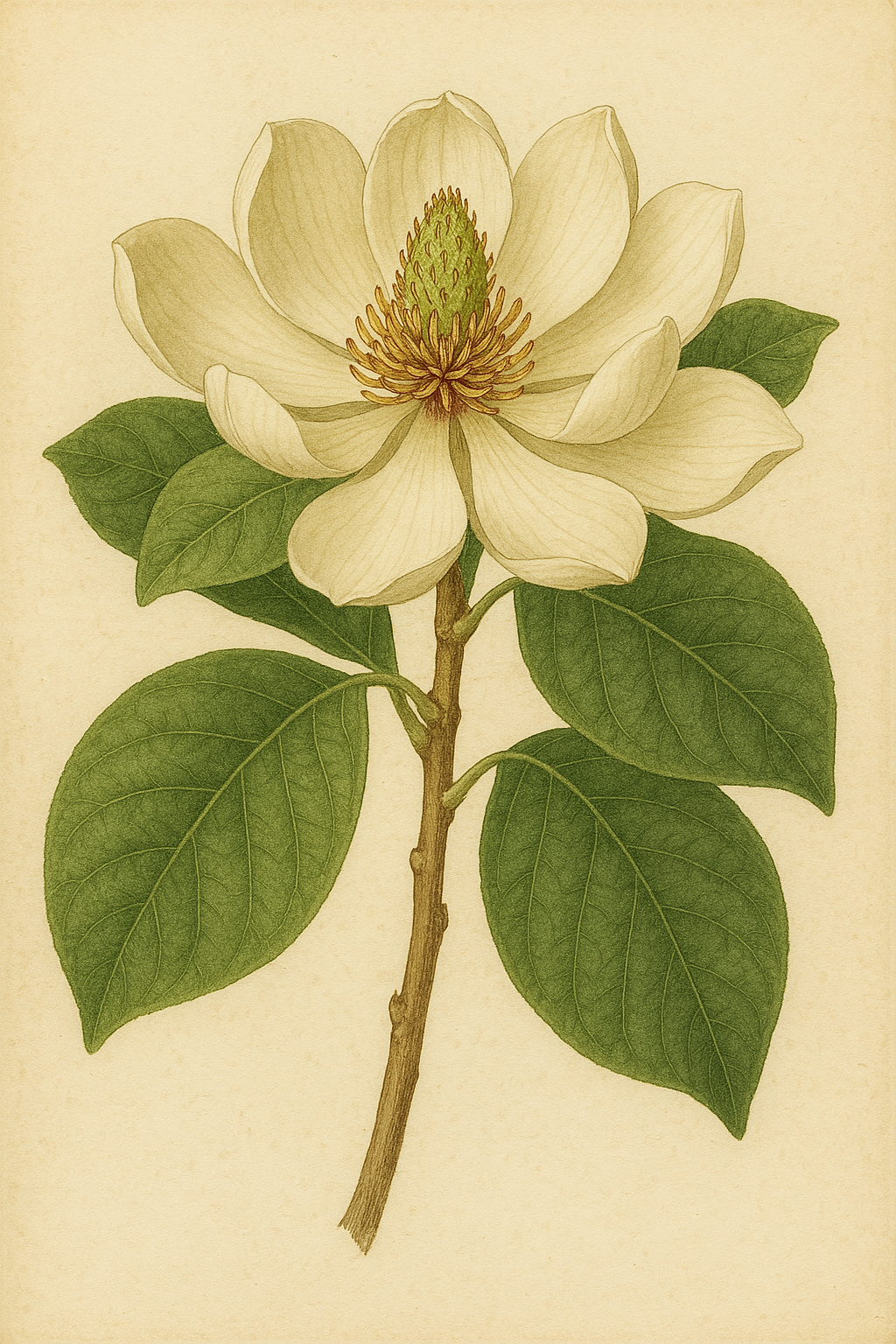
- Magnoliaceae (Magnolia family): Also basal angiosperms, woody, aromatic, simple alternate leaves, spiral floral parts. Distinguished by the presence of stipules (often leaving a circular scar around the twig), typically bisexual flowers, and different fruit types (follicle or samara aggregates, not typically berries or star-shaped follicles).
- Lauraceae (Laurel family): Aromatic trees/shrubs with simple alternate leaves. Differ in having typically small, 3-merous flowers (parts in 3s), often a distinct hypanthium, and fruit usually a single drupe (like a bay leaf berry or avocado).
- Winteraceae family: Another basal group; woody, aromatic, simple alternate exstipulate leaves, apocarpous. Distinguished by technical features like vessel-less wood and different stamen/pollen morphology. Flowers often have fewer parts than Schisandraceae.
Field Guide Quick Reference
Look For:
- Woody habit (vine, shrub, tree)
- Strongly aromatic
- Simple, alternate, exstipulate leaves
- Flowers with numerous, spiral tepals
- Numerous, spiral stamens or carpels
- Carpels separate (apocarpous)
- Aggregate fruit (berries or follicles)
Key Variations:
- Habit: Vine vs. Shrub/Tree
- Fruit: Aggregate of berries (Schisandra, Kadsura) vs. Star-shaped aggregate of follicles (Illicium)
- Flower color varies
- Deciduous vs. Evergreen
Notable Examples
The Schisandraceae family includes several species of economic, medicinal, and horticultural importance:

Illicium verum
Star Anise
An evergreen tree native to Vietnam and southern China, cultivated for its distinctive fruit. The fruit is an aggregate of follicles arranged in a star shape, harvested before ripening and dried. It's a major spice in Asian cuisine and a source of shikimic acid, used pharmaceutically. All parts are aromatic with an anise-like scent.

Schisandra chinensis
Magnolia Vine, Wu Wei Zi
A deciduous woody vine native to forests of Northern China and the Russian Far East. It's famous for its bright red berries, known as "five-flavor berries" (wu wei zi) in traditional Chinese medicine, where they are used as an adaptogen. The plant is typically dioecious, bearing separate male and female flowers.

Illicium floridanum
Florida Anise Tree, Stinkbush
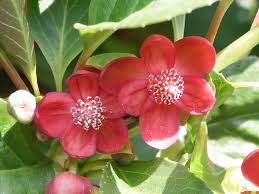
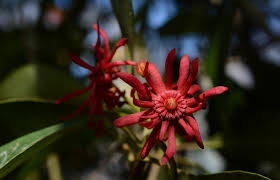
An evergreen shrub native to wetlands in the southeastern United States (Florida to Louisiana). It has aromatic, olive-green leaves and produces unique, dark red to maroon flowers with numerous strap-like tepals in spring. Unlike true star anise, its fruit is toxic. Often cultivated as an ornamental shrub for shady, moist areas.
Phylogeny and Classification
Schisandraceae occupies a pivotal position in the evolution of flowering plants. It belongs to the order Austrobaileyales, which represents one of the three earliest diverging lineages of extant angiosperms, often grouped with Amborellales and Nymphaeales as the "ANITA grade" (though this grade is paraphyletic). Austrobaileyales is considered the sister group to all other flowering plants except Amborellales and Nymphaeales.
This placement means Schisandraceae retains many features considered ancestral or "primitive" among flowering plants, such as flowers with numerous, spirally arranged parts, undifferentiated tepals, and separate carpels (apocarpy). Studying this family provides crucial insights into the morphology and evolution of the earliest angiosperms. The order Austrobaileyales is small, containing only Schisandraceae and two other small families: Austrobaileyaceae and Trimeniaceae.
Position in Plant Phylogeny
- Kingdom: Plantae
- Clade: Angiosperms (Flowering plants)
- Order: Austrobaileyales
- Family: Schisandraceae
Evolutionary Significance
The Schisandraceae family is highly significant from an evolutionary perspective:
- Basal Angiosperm Lineage: Its position in Austrobaileyales places it near the very base of the flowering plant evolutionary tree.
- Insights into Early Flowers: Exhibits features like spiral arrangement of parts, numerous parts, undifferentiated tepals, and apocarpy, which inform hypotheses about the structure of early angiosperm flowers.
- Chemical Diversity: Production of complex ethereal oils and lignans represents an early development of sophisticated secondary metabolism.
- Biogeography: The disjunct distribution (Asia and SE North America/Caribbean) reflects ancient origins and continental drift patterns.