Orthotrichaceae
Bristle Moss / Orthotrichum Moss Family
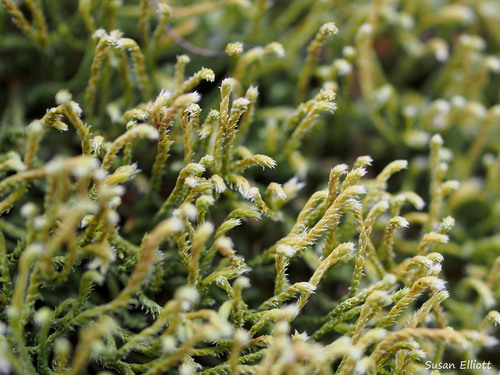
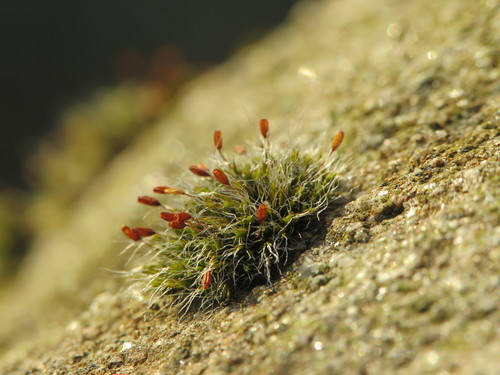
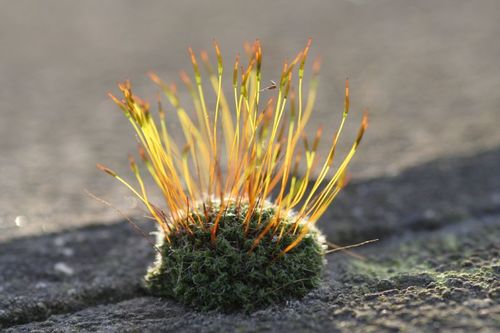
Orthotrichaceae is a large and widespread family of typically acrocarpous mosses that commonly form dense cushions or tufts. They are most frequently found as epiphytes on the bark of trees and shrubs, but many species also grow on rocks (epilithic). A characteristic feature of many species is the hairy (pilose) calyptra that covers the capsule, leading to the common name "bristle mosses". Capsules are often immersed or shortly exserted and frequently ribbed.
Overview
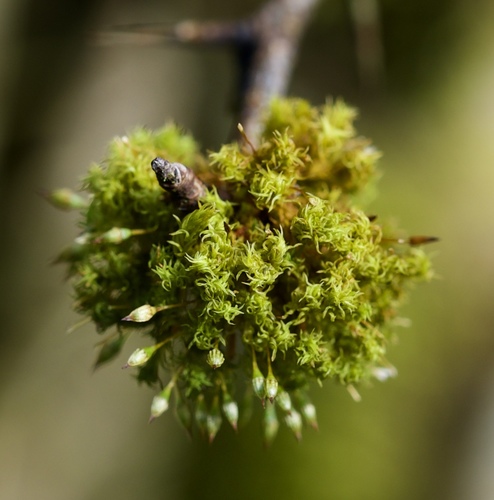
The Orthotrichaceae family belongs to its own order, Orthotrichales. It is a large family containing around 15-20 genera and anywhere from 300 to over 600 species, depending on the taxonomic treatment, with Orthotrichum being the largest genus. The family is cosmopolitan, occurring from polar regions to the tropics, but is particularly diverse and abundant in temperate climates.
These mosses are typically well-adapted to exposed epiphytic or epilithic habitats, often showing considerable desiccation tolerance. Key features include the cushion or tuft-forming acrocarpous habit, lanceolate leaves often with recurved margins and papillose cells, immersed to shortly exserted capsules that are frequently ribbed when dry, and the often large, hairy, mitrate or campanulate calyptrae covering the capsules. The peristome structure is notably variable within the family.
Ecologically, Orthotrichaceae are very important primary colonizers and components of epiphytic and epilithic communities globally. They contribute to bark and rock weathering, provide microhabitats, and are indicators of air quality in some regions. Asexual reproduction via gemmae is common in some genera like Zygodon and Ulota.
Quick Facts
- Scientific Name: Orthotrichaceae
- Common Name: Bristle Moss Family, Orthotrichum Moss Family
- Number of Genera: Approximately 15-20
- Number of Species: ~300-600+
- Distribution: Cosmopolitan, common worldwide, especially temperate regions.
- Evolutionary Group: Bryophytes - Mosses - Orthotrichales
Key Characteristics (Moss Morphology)
Gametophyte: Growth Form and Habit
Plants are acrocarpous, typically forming dense cushions or tufts, sometimes small mats. Stems are erect to ascending, usually branched, often covered below with rhizoids.
Gametophyte: Stems
Stems usually possess a central strand, though it can be weak or absent in some small species.
Gametophyte: Leaves
Leaves are typically crowded, appressed to erect-spreading when dry (often more spreading or recurved in Ulota), spreading when moist. They are usually lanceolate, ovate-lanceolate, or oblong-lanceolate, often keeled. Leaf apices range from acute to obtuse or rounded. Margins are very often recurved or revolute (rolled backwards), usually entire or sometimes slightly toothed near the apex. The costa is single and strong, typically ending near the apex. Leaf cells are typically thick-walled; upper cells are often small, rounded-quadrate, isodiametric, or shortly rectangular, and frequently papillose (with simple or branched papillae); basal cells are usually longer, rectangular or quadrate, often clearer (hyaline) or colored, sometimes papillose.
Sporophyte: Seta, Capsule, Calyptra, and Peristome
Sexual condition is typically autoicous or gonioautoicous (male buds at base of female branch), sometimes dioicous. The seta is usually short, resulting in the capsule being immersed among the perichaetial leaves, emergent, or shortly exserted (seta is longer in Ulota). The capsule is typically erect and symmetrical, ovoid to cylindric, and very often strongly ribbed (striate or plicate) when dry (8 or 16 ribs). Stomata are often present on the capsule neck, frequently superficial or immersed. The operculum is conical to rostrate. The calyptra (covering the young capsule) is large, conspicuous, typically conic-mitrate (cone-shaped, unslit) or campanulate (bell-shaped, lobed at base), often plicate, and frequently covered with erect or papillose hairs (pilose). The peristome is highly variable, typically double but sometimes single or absent. Exostome teeth are 16, often grouped or fused in pairs (appearing as 8 compound teeth), frequently reflexed or recurved when dry. Endostome segments are typically 8 or 16, narrow, or sometimes rudimentary or absent. Cilia are generally absent.
Asexual Reproduction
Asexual reproduction via multicellular gemmae produced on leaves or stems is common in some genera, such as Zygodon and Ulota.
Field Identification (Mosses)
Identifying Orthotrichaceae often relies on habitat, growth form, and sporophyte features, especially the calyptra:
Primary Identification Features (Field/Hand Lens)
- Habitat: Primarily epiphytic on tree bark (trunks, branches) or epilithic on rocks.
- Habit: Acrocarpous cushions or tufts.
- Capsules: Often immersed, emergent, or shortly exserted (except Ulota), typically erect and ribbed when dry.
- Hairy Calyptra: Look for conspicuous, often hairy, cap-like calyptrae covering young capsules (a very strong indicator if present).
- Leaves: Lanceolate, often with recurved margins (use lens), appressed or sometimes crisped (Ulota) when dry.
- Papillose cells: Leaves may appear somewhat dull due to papillae (confirm with microscope).
Secondary Identification Features (Microscope often needed)
- Cell shape and papillosity: Confirm upper cells small, thick-walled, often papillose; basal cells different.
- Leaf margin recurvature: Check extent of rolled margin.
- Capsule ribs and stomata: Observe number of ribs, presence and type of stomata (superficial vs. immersed).
- Peristome details: Examine exostome teeth (reflexed? paired?) and endostome structure (requires mature, open capsules).
- Gemmae: Look for small asexual propagules on leaves/stems in relevant genera.
Common Confusion Points (Other Mosses)
- Pottiaceae (e.g., Tortula, Syntrichia): Many grow on bark/rock, form cushions, but often have leaves ending in hair points (awned), different cell structures (often highly papillose), and different peristomes.
- Grimmiaceae (e.g., Grimmia, Schistidium): Primarily rock-dwelling cushion mosses, often hoary (with hair points), capsules often immersed but peristomes are single or absent, calyptrae usually small and smooth.
- Leucodontaceae: Epiphytic/epilithic, but pleurocarpous with ecostate leaves and different sporophytes.
- Bryaceae (small epiphytic species): Acrocarpous, but usually have smooth cells, different leaf shapes, longer setae, inclined/pendent capsules, and typical Bryoid peristomes.
- Hedwigiaceae: Epilithic cushion mosses, often hoary, lack costa, have highly papillose cells, immersed capsules, and no peristome.
Field Guide Quick Reference (Mosses)
Look For:
- Acrocarpous cushions/tufts on bark or rock
- Immersed/emergent/shortly exserted capsules
- Capsules often ribbed when dry
- Hairy calyptra covering capsule (often)
- Lanceolate leaves, often with recurved margins
Key Variations:
- Habitat (bark vs. rock)
- Seta length (short vs. long in Ulota)
- Calyptra (hairy vs. smooth, plicate vs. smooth)
- Leaf posture when dry (appressed vs. crisped)
- Presence/absence of gemmae
Notable Genera
This large family includes several common and widespread genera:

Orthotrichum
Bristle Moss (Genus)
The largest genus, very common worldwide, mostly epiphytic. Characterized by immersed to emergent, typically ribbed capsules, often hairy and plicate calyptrae, and variable peristomes. Leaves usually appressed when dry with recurved margins.

Ulota
Crisped Bristle Moss (Genus)
Common epiphytes, distinguished from Orthotrichum by leaves that are typically strongly crisped or contorted when dry, longer setae resulting in exserted capsules, and often campanulate (bell-shaped) calyptrae. Asexual gemmae common.

Zygodon
Yoke Moss (Genus)
Forms small cushions, often on trees or rocks. Leaves typically lanceolate, sometimes crisped when dry. Costa strong. Capsules usually smooth or lightly ribbed, peristome often reduced or absent. Characterized by abundant fusiform (spindle-shaped) gemmae produced in leaf axils.

Lewinskya
(Genus)
A genus segregated from Orthotrichum based primarily on molecular data and subtle morphological features, often related to stomata type (superficial vs. immersed) and peristome details. Includes species formerly in Orthotrichum subg. Pulchella, like L. speciosa.
Phylogeny and Classification
Orthotrichaceae is the principal family in the order Orthotrichales, class Bryopsida. This order is somewhat isolated phylogenetically among the acrocarpous mosses. While traditionally grouped with other acrocarps possessing double peristomes, molecular studies confirm its distinctness. Its exact relationships to other major moss orders remain somewhat unclear, though it's firmly within the Bryopsida.
Key evolutionary trends within the family include strong adaptation to epiphytic and epilithic life, resulting in desiccation tolerance mechanisms (e.g., leaf posture, papillosity, thick cell walls). The sporophyte shows considerable variation, particularly in the peristome structure (ranging from well-developed double to single or absent) and the frequent development of hairy, protective calyptrae. This variability suggests diverse adaptations related to spore protection and dispersal in exposed environments.
Position in Plant Phylogeny
- Kingdom: Plantae
- Division: Bryophyta (Mosses)
- Class: Bryopsida
- Order: Orthotrichales
- Family: Orthotrichaceae
Evolutionary Significance
The Orthotrichaceae family is significant for:
- Mastery of Epiphytism/Epilithism: Represents one of the most successful and diverse moss families in bark and rock habitats worldwide.
- Desiccation Tolerance Strategies: Exhibits various morphological and physiological adaptations to survive drying cycles.
- Calyptra Diversity: The evolution of large, often hairy and plicate calyptrae is a notable feature, likely providing protection to the developing sporophyte.
- Peristome Variability: Shows remarkable diversity in peristome structure, offering insights into the evolution of spore dispersal mechanisms.
- Indicator Value: Sensitivity of many species to air pollution makes them useful bioindicators.