Frankeniaceae
Sea Heath Family / Frankenia Family
The Frankeniaceae is a small family of flowering plants in the order Caryophyllales, consisting mostly or entirely of the genus Frankenia. These plants are typically low-growing herbs or subshrubs adapted to saline or arid environments (halophytes and xerophytes), often resembling heaths (family Ericaceae) in appearance due to their small, often rolled leaves. They are found in scattered locations worldwide.
Overview
The Frankeniaceae family comprises about 90 species, usually all placed within the single genus Frankenia (though a few other small genera are sometimes recognized). These plants are specialized inhabitants of harsh environments like salt marshes, coastal dunes, deserts, and gypsum soils. Their distribution is widespread but patchy, occurring in temperate and subtropical regions of Europe (especially Mediterranean), North and South America, North and South Africa, Central Asia, and Australia.
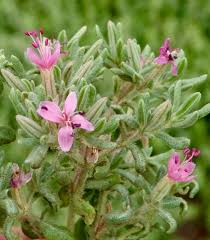
Members of the family are typically small, much-branched perennial herbs or subshrubs, often forming mats or low mounds. They possess small, opposite leaves that are frequently ericoid (heath-like) with rolled margins, an adaptation to reduce water loss. A key feature is the presence of salt glands on the leaves and stems, which excrete excess salt, often visible as tiny white crusts. The flowers are small but often numerous, typically pink or whitish, with a distinctive tubular calyx and clawed petals.
Frankeniaceae have limited economic importance but are ecologically significant as primary colonizers or dominant species in saline habitats where few other plants can survive. They are studied for their remarkable salt tolerance mechanisms.
Quick Facts
- Scientific Name: Frankeniaceae Desv.
- Common Name: Sea Heath Family, Frankenia Family
- Number of Genera: 1 (Frankenia) - sometimes split into 4.
- Number of Species: Approximately 90
- Distribution: Widespread but scattered in arid, saline, coastal habitats worldwide.
- Evolutionary Group: Core Eudicots - Caryophyllales
- Key Feature: Halophytic/xerophytic herbs/subshrubs; small opposite, often ericoid leaves with salt glands; tubular calyx; clawed petals; capsule fruit.
Key Characteristics
Growth Form and Habit
Members of Frankeniaceae are annual or perennial herbs or subshrubs, typically low-growing and much-branched, sometimes forming mats or cushions. Stems are sometimes jointed.
Leaves
Leaves are small, simple, arranged oppositely (sometimes appearing whorled due to short internodes). They are often ericoid (heath-like: small, linear or scale-like, with margins rolled inwards), an adaptation to dry or saline conditions. Stipules are absent (exstipulate). A key feature is the presence of specialized salt-excreting glands, often visible as small pits or white encrustations on the leaf surface.
Inflorescence
Flowers are borne solitary in leaf axils or grouped into terminal or axillary cymes (dichasia).
Flowers
Flowers are small, actinomorphic (radially symmetrical), usually bisexual, and typically 4- to 7-merous (most often 5-merous).
- Calyx: Consists of 4-7 sepals fused into a persistent, tubular or funnel-shaped structure with distinct ribs and short lobes at the apex.
- Corolla: Consists of 4-7 distinct (free) petals, alternating with the calyx lobes. Petals are typically pink, purple, or whitish and characteristically have a long, narrow base (claw) and an expanded upper part (limb). Often, there are scale-like appendages on the inner surface at the junction of the claw and limb.
- Androecium: Stamens are variable in number, typically 3-24+, often 6 in two whorls (3 inner, 3 outer). Filaments are distinct; anthers dehisce via longitudinal slits.
- Gynoecium: A superior ovary composed of typically 3 (sometimes 2 or 4) fused carpels, forming a single locule. Placentation is parietal (ovules attached to ovary wall) or basal. Styles are fused below but typically branch above into distinct stigmas equal to the carpel number.
Fruits and Seeds
The fruit is a small, loculicidal capsule enclosed within the persistent calyx tube. It contains few to numerous small seeds. Seeds often have endosperm.
Salt Tolerance
A key physiological characteristic is their high tolerance to saline conditions, facilitated by the salt glands that actively excrete excess salt absorbed from the soil.
Field Identification
Identifying Frankenia species involves looking for their characteristic habit, leaves, flowers, and habitat:
Primary Identification Features
- Habitat: Saline or arid environments (salt marshes, coastal areas, deserts, gypsum soils).
- Habit: Low-growing, often mat-forming herbs or subshrubs with a heath-like appearance.
- Leaves: Small, opposite, often ericoid (needle-like or scale-like with rolled margins).
- Salt Glands: Look closely for tiny pits or white salt crystals on leaf surfaces.
- Flowers: Small (usually pink or white) with a distinctive ribbed, tubular calyx and clawed petals (petals narrowed at the base).
- Fruit: Small capsule remaining enclosed within the persistent calyx tube.
Secondary Identification Features
- Stem Appearance: Stems often wiry, sometimes appearing jointed.
- Petal Appendages: Scale-like appendages often present on the inner surface of petals near the base (requires magnification).
- Stamen Number: Often 6, but variable.
Seasonal Identification Tips
- Flowering Season: Typically spring and summer, though dependent on rainfall in arid regions. Flowers are necessary for positive identification.
- Salt Excretion: Salt crystals may be more visible during dry periods following active growth.
- Year-round: The heath-like habit, opposite ericoid leaves, and specific habitat are useful clues year-round.
Common Confusion Points
Frankenia can be confused with other small-leaved plants of similar habitats:
- Heaths (Ericaceae): True heaths have similar ericoid leaves but typically have urn-shaped or bell-shaped flowers with fused petals (corolla tube) and different fruit types (capsules or berries not enclosed in a tubular calyx). They usually lack salt glands and prefer acidic, not necessarily saline, soils.
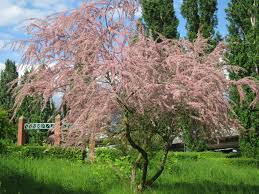
- Tamarisk (Tamarix, Tamaricaceae): Sister family, often found in similar saline/arid habitats. Tamarisks are typically larger shrubs or trees with scale-like leaves that overlap along the stem (not strictly opposite) and flowers in dense racemes or panicles with different structure (free sepals/petals, nectar disc).
- Some Caryophyllaceae (Pink family): Certain cushion-forming or small-leaved Caryophyllaceae (e.g., sandworts, pearlworts) might resemble Frankenia vegetatively, but their flowers typically have notched petals (if present), free sepals (or a calyx tube without prominent ribs), and different fruit capsules (opening by teeth). They lack salt glands.
- Certain Asteraceae (Composite family): Some small, heath-like shrubs in Asteraceae exist, but they will have composite flower heads (capitula), not individual flowers with the structure described for Frankeniaceae.
Field Guide Quick Reference
Look For:
- Low herb/subshrub (saline/arid habitat)
- Heath-like appearance
- Small, opposite, often ericoid leaves
- Salt glands/crystals on leaves
- Small pink/white flowers
- Ribbed, tubular calyx
- Clawed petals (narrowed base)
- Capsule fruit inside calyx
Key Distinctions:
- Salt glands present
- Tubular calyx + clawed petals (vs. Ericaceae)
- Opposite leaves (vs. Tamarix scale-leaves)
- Individual flowers (vs. Asteraceae heads)
- Compare flower structure to Caryophyllaceae
Notable Examples
All species belong to the genus Frankenia (in the broad sense):

Frankenia laevis
Sea Heath
A common mat-forming perennial found in coastal salt marshes and shores of Western Europe and the Mediterranean. Features small, slightly fleshy, opposite leaves and numerous small pink flowers.

Frankenia pulverulenta
Annual Sea Heath / Annual Frankenia
A small, prostrate annual species with a very wide but scattered distribution in saline or disturbed habitats across Europe, Asia, Africa, Australia, and the Americas. Leaves are often broader and flatter than F. laevis, sometimes appearing mealy due to salt glands.

Frankenia jamesii
James' Sea Heath / James' Frankenia
A small subshrub native to arid, often gypsum-rich soils in the southwestern United States (Colorado, New Mexico, Texas, Oklahoma). Forms low mounds with small, grayish, ericoid leaves and relatively conspicuous white or pinkish flowers.
Phylogeny and Classification
Frankeniaceae is placed within the order Caryophyllales, a large and diverse order belonging to the core eudicots. This order is known for including many families adapted to extreme environments (deserts, saline soils) and exhibiting unique physiological adaptations (e.g., salt tolerance, carnivory, CAM/C4 photosynthesis).
Molecular phylogenetic studies have robustly shown that Frankeniaceae is the sister family to Tamaricaceae (Tamarisk family). Together, these two families form a distinct clade characterized by adaptations to saline and arid conditions, often possessing salt glands. This Frankeniaceae-Tamaricaceae clade is related to other families within the Caryophyllales, such as Polygonaceae (Buckwheat family) and Plumbaginaceae (Leadwort family).
Position in Plant Phylogeny
- Kingdom: Plantae
- Clade: Angiosperms (Flowering plants)
- Clade: Eudicots
- Clade: Core Eudicots
- Order: Caryophyllales
- Family: Frankeniaceae
Evolutionary Significance
Frankeniaceae is significant for several evolutionary reasons:
- Adaptation to Salinity: Provides a key example of evolutionary adaptation to high-salt environments within the angiosperms, particularly through the development of efficient salt glands.
- Convergent Evolution: Its heath-like appearance (ericoid leaves) is a striking example of convergent evolution with the unrelated Ericaceae family, driven by adaptation to dry or stressful conditions.
- Phylogenetic Placement: Its close relationship with Tamaricaceae clarifies relationships within the Caryophyllales and highlights a clade specialized for saline/arid habitats.
- Biogeography: Its widespread but disjunct global distribution pattern raises interesting questions about long-distance dispersal and historical biogeography.