Eucommiaceae
Eucommia Family / Hardy Rubber Tree Family
The Eucommiaceae is a monotypic family of flowering plants in the order Garryales, containing only a single living species, Eucommia ulmoides. This deciduous tree is native to central China but is cultivated elsewhere. It is notable for being one of the few temperate trees to produce rubbery latex and for its use in traditional Chinese medicine.
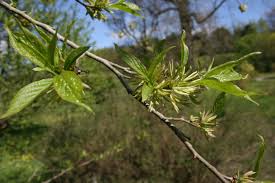
Overview
The Eucommiaceae family consists solely of the species Eucommia ulmoides, often called the Hardy Rubber Tree or Du Zhong. While now restricted in the wild to mountainous regions of central China, it was once more widespread, as indicated by fossil evidence across the Northern Hemisphere. It is cultivated in China for medicinal purposes and occasionally planted as an ornamental tree in temperate regions worldwide due to its attractive form and tolerance to urban conditions.
Eucommia ulmoides is a medium-sized deciduous tree reaching heights of 15-20 meters. Its most distinctive feature is the presence of latex containing gutta-percha-like rubber; gently tearing a leaf reveals fine, elastic strands of this latex bridging the gap. The tree is dioecious, with separate male and female individuals producing small, inconspicuous, wind-pollinated flowers before the leaves emerge in spring. The fruit is a winged samara, similar in appearance to an elm fruit.
The bark (Du Zhong) is highly valued in traditional Chinese medicine, used for various ailments, particularly related to kidney and liver health, and strengthening bones and muscles. The tree's unique phylogenetic position and status as a "living fossil" also make it significant botanically.
Quick Facts
- Scientific Name: Eucommiaceae Engl.
- Common Name: Eucommia Family, Hardy Rubber Tree Family
- Number of Genera: 1 (Eucommia)
- Number of Species: 1 (Eucommia ulmoides)
- Distribution: Native to central China; cultivated elsewhere.
- Evolutionary Group: Eudicots - Asterids - Lamiids - Garryales
- Key Feature: Monotypic family; deciduous tree producing rubbery latex; dioecious; apetalous flowers; fruit a winged samara.
Key Characteristics
Growth Form and Habit
Eucommia ulmoides is a medium-sized, deciduous tree with a rounded crown.
Leaves
Leaves are simple, arranged alternately along the stem, ovate in shape with serrated margins, and acuminate (tapering to a point) tips. They resemble elm leaves but lack the asymmetrical base typical of elms. Stipules are absent. A key feature is the presence of rubbery latex, visible as fine strands when a leaf is carefully torn.
Latex
All parts of the plant, especially the leaves and bark, contain a rubbery latex (chemically similar to gutta-percha).
Flowers
Plants are dioecious (male and female flowers on separate trees). Flowers are small, greenish, inconspicuous, lack petals (apetalous), and appear before the leaves in early spring. They are wind-pollinated.
- Male Flowers: Borne in clusters along the previous year's twigs. Consist of typically 4-12 stamens with short filaments and linear anthers; subtended by bracts but lacking a distinct perianth (sepals or petals).
- Female Flowers: Borne solitary in the axils of bracts. Consist of a single superior ovary composed of 2 fused carpels (though only one typically develops a seed), topped by two spreading, linear stigmas. A perianth is absent.
Fruits and Seeds
The fruit is a flattened, winged samara, about 2-3 cm long, resembling the fruit of an elm (Ulmus). It contains a single seed and is dispersed by wind.
Chemical Characteristics
The presence of gutta-percha-like latex is characteristic. The bark contains various lignans, iridoids, and other compounds believed to contribute to its medicinal properties.
Field Identification
Identifying Eucommia ulmoides involves recognizing its tree habit and specific leaf and fruit features:
Primary Identification Features
- Habit: Medium-sized deciduous tree.
- Latex: Gently tear a leaf – fine, elastic strands of rubbery latex should be visible. This is highly diagnostic.
- Leaves: Alternate, simple, ovate, serrated leaves resembling elm leaves but with a symmetrical base.
- Flowers: Small, greenish, apetalous flowers appearing before leaves (often missed). Dioecious condition (male/female trees separate).
- Fruit: Distinctive winged samara, similar to an elm fruit.
Secondary Identification Features
- Bark: Gray-brown, becoming furrowed with age. Medicinal bark (Du Zhong) has a characteristic appearance if harvested.
- Buds: Pointed, brown buds.
- Absence of Stipules: No stipules at the base of the leaf petiole.
Seasonal Identification Tips
- Spring: Look for inconspicuous flowers before leaves emerge. New leaves will show latex clearly.
- Summer: Identify by alternate, serrated leaves exhibiting latex when torn. Developing samaras may be present.
- Fall: Leaves turn yellow before dropping. Mature samaras are present.
- Winter: Identify by bark, buds, and persistent samaras (if any remain).
Common Confusion Points
Eucommia can be confused with other deciduous trees, especially elms:
- Elms (Ulmus, Ulmaceae): Have similar serrated leaves and winged samaras. Key differences: Elm leaves typically have an asymmetrical base, and elms lack the rubbery latex of Eucommia. Elm flowers usually have both stamens and pistil (perfect flowers, though functionally complex).
- Other trees with simple, alternate, serrated leaves: Many trees fit this description (e.g., some birches, cherries). The presence of latex when a leaf is torn is the best way to confirm Eucommia. The specific samara fruit is also distinctive.
Field Guide Quick Reference
Look For:
- Deciduous tree habit
- Alternate, simple, serrated leaves
- Rubbery latex in torn leaf
- Stipules absent
- Dioecious (separate M/F trees)
- Apetalous flowers (early spring)
- Winged samara fruit
Key Distinctions:
- Latex presence (vs. Elms, etc.)
- Symmetrical leaf base (vs. Elms)
- Apetalous flowers
- Samara fruit type
- Monotypic family
Notable Examples
As a monotypic family, there is only one living species:

Eucommia ulmoides
Hardy Rubber Tree / Du Zhong
The sole surviving member of the Eucommiaceae family. A deciduous tree native to China, known for its rubbery latex, elm-like leaves (but with symmetrical bases), winged samara fruits, and extensive use in traditional Chinese medicine.
Phylogeny and Classification
Eucommiaceae is placed in the order Garryales, within the Lamiid clade of Asterids. This order contains only one other family, the Garryaceae (Silk Tassel family), which includes shrubs and trees primarily from North and Central America (genus Garrya) and East Asia (genus Aucuba). The relationship between these two geographically separated families within Garryales is strongly supported by molecular data.
The order Garryales itself represents one of the basal lineages within the large Lamiid clade. Other major orders within the Lamiids include Gentianales (e.g., Rubiaceae, Apocynaceae), Lamiales (e.g., Lamiaceae, Verbenaceae, Oleaceae), and Solanales (e.g., Solanaceae, Convolvulaceae). The placement of Eucommiaceae highlights its unique evolutionary history, distinct from other latex-producing or wind-pollinated trees.
Position in Plant Phylogeny
- Kingdom: Plantae
- Clade: Angiosperms (Flowering plants)
- Clade: Eudicots
- Clade: Asterids
- Clade: Lamiids
- Order: Garryales
- Family: Eucommiaceae
Evolutionary Significance
Eucommiaceae is evolutionarily significant for several reasons:
- Living Fossil: Represents the sole survivor of a lineage that was more diverse and widespread in the Tertiary period, as evidenced by fossils across the Northern Hemisphere.
- Unique Trait Combination: Combines features like latex production (rare in temperate deciduous trees), dioecy, wind pollination, apetalous flowers, and samara fruits.
- Phylogenetic Position: Its placement in Garryales, a basal lineage of the large Lamiid clade, helps in understanding the early evolution and relationships within this major group of Asterids.
- Biogeography: Its current restricted range compared to its fossil distribution provides insights into past climate change and extinction patterns.