Dioscoreaceae
Yam Family
Dioscoreaceae is a family of flowering plants primarily composed of twining vines arising from underground tubers or rhizomes, belonging to the monocot order Dioscoreales. It is widely distributed in tropical and warm temperate regions and is economically important as the source of edible yams (Dioscorea species). The family also includes the unusual "Bat Flowers" (Tacca). Leaves often show distinctive palmate-arcuate venation, and flowers are typically small, unisexual, and 3-merous, often followed by 3-winged capsules.
Overview
The Dioscoreaceae family comprises about 8-9 genera and 750-800 species, with the vast majority belonging to the genus Dioscorea. These plants are predominantly found in tropical and subtropical regions worldwide, extending into some temperate areas. They typically inhabit forests, woodlands, and thickets, often climbing on other vegetation.
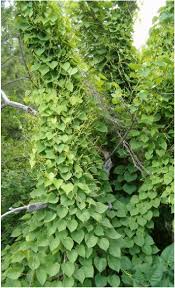
Most members are perennial vines that climb by twining their stems, growing anew each season from starchy underground tubers or rhizomes. These tubers are the edible "yams" consumed as staple foods in many parts of the world (distinct from sweet potatoes, Ipomoea batatas, which are in the Convolvulaceae family). Leaves are characteristically heart-shaped or ovate with distinctive venation resembling that of dicots. Plants are usually dioecious, bearing small, inconspicuous, 6-parted flowers in spikes or panicles. The most common fruit type is a 3-winged capsule. The family concept has been expanded (e.g., APG system) to include genera like Tacca (Bat Flowers) and Trichopus, previously placed in their own families.
Beyond food, some species contain important steroidal saponins like diosgenin, used historically as a precursor for synthesizing hormones such as progesterone.
Quick Facts
- Scientific Name: Dioscoreaceae R.Br.
- Common Name: Yam Family
- Number of Genera: Approximately 8-9
- Number of Species: Approximately 750-800
- Distribution: Pantropical and subtropical, extending into temperate regions.
- Evolutionary Group: Angiosperms - Monocots - Dioscoreales
- Habit: Mostly twining vines from tubers/rhizomes; some herbs.
Key Characteristics
Growth Form and Habit
The vast majority are perennial twining vines, either herbaceous or somewhat woody. They climb by twining their stems (direction, clockwise or counter-clockwise, is often species-specific). Growth arises from underground storage organs, typically starchy tubers (yams) or thick, knotty rhizomes. Some species, notably Tacca, are non-climbing terrestrial herbs with large leaves arising from rhizomes.
Leaves
Leaves are usually arranged alternately, but sometimes opposite, especially near the base of the stem. Leaf blades are typically simple and often heart-shaped (cordate) or ovate, though some species have palmately lobed or compound leaves. A distinctive feature is the palmate-arcuate venation: several major veins arise from the petiole insertion point and curve towards the leaf apex, interconnected by finer reticulate (net-like) veins, appearing somewhat dicot-like. Petioles are usually present, often with swellings (pulvini) at the base and/or apex that allow leaf movement. Stipules are absent, but small spines or stipule-like appendages may occur at the petiole base in some species. Many Dioscorea species produce small aerial tubers called bulbils in the leaf axils.
Inflorescence
Flowers are borne in axillary or sometimes terminal inflorescences, typically slender racemes, spikes, or branched panicles, which are often pendent (hanging). In Tacca, the inflorescence is an umbel-like cluster on a tall scape, surrounded by large, often colored bracts and bearing long, filiform (thread-like) bracteoles, giving it a bizarre "bat-like" appearance.
Flowers
Flowers are generally small, inconspicuous, unisexual (plants are typically dioecious), and radially symmetrical (actinomorphic). They are typically 3-merous (parts in threes).
- Perianth: Consists of 6 tepals arranged in two whorls of 3. Tepals are usually small, similar in appearance (sepaloid or somewhat petaloid), greenish, whitish, yellowish, or purplish, and either free or fused at the base into a short tube.
- Androecium (Male flowers): Typically consists of 6 fertile stamens in two whorls, or sometimes only 3 fertile stamens alternating with 3 staminodes (sterile stamens), or just 3 stamens. Filaments are free or attached to the perianth base. Anthers are small. A rudimentary pistil (pistillode) is often present.
- Gynoecium (Female flowers): Features an inferior ovary (usually; superior in Trichopus), composed of 3 fused carpels forming 3 locules (chambers). Styles are usually 3, free or fused below, often forked (bifid). Ovules are typically 2 per locule (axile placentation), but numerous on parietal placentas in Tacca. Staminodes are often present.
Fruits and Seeds
The most characteristic fruit in the family, typical of Dioscorea, is a loculicidal capsule that is distinctively 3-winged or 3-angled. In Tacca and Trichopus, the fruit is a fleshy berry. Seeds are often flattened and winged in Dioscorea (aiding wind dispersal), or ribbed/angled in Tacca. Seeds contain endosperm.
Chemical Characteristics
Many species, particularly in Dioscorea, produce steroidal saponins, such as diosgenin, which has pharmaceutical importance. Alkaloids and tannins are also common. The tubers are rich in starch but may also contain toxic compounds requiring careful preparation before consumption in some wild species.
Field Identification
Identifying Dioscoreaceae often involves recognizing the climbing habit, distinctive leaves, and characteristic fruits:
Primary Identification Features
- Twining vine habit (most species): Look for herbaceous or slightly woody vines climbing by twining stems. Note the direction of twining if possible.
- Underground tuber or rhizome: Source of the climbing stems.
- Alternate (usually), heart-shaped leaves: Leaf shape is often cordate or ovate.
- Palmate-arcuate venation: Several main veins curve from base to apex, connected by finer net-like veins.
- Dioecious plants: Male and female flowers on separate plants.
- Small, 6-tepaled flowers: Borne in spikes, racemes, or panicles.
- Inferior ovary (usually): Visible below the tepals in female flowers.
- 3-winged capsule fruit (common): Highly characteristic fruit type for Dioscorea.
- Berry fruit (Tacca, Trichopus): Fleshy fruit in these genera.
- Tacca morphology: Distinctive non-climbing herb with large, often dissected leaves and bizarre "bat flower" inflorescence.
Secondary Identification Features
- Axillary bulbils: Small aerial tubers in leaf axils are common in many Dioscorea.
- Petiolar pulvini: Swellings at the base/apex of the petiole.
- Spines or appendages at petiole base (some species).
Seasonal Identification Tips
Vegetative features are useful during the growing season:
- Growing Season: Vines emerge from tubers/rhizomes. Leaf shape and venation are key. Look for bulbils.
- Flowering Season (Varies): Small flowers in characteristic inflorescences appear. Sex of plant can be determined.
- Fruiting Season: The 3-winged capsules (Dioscorea) are often persistent and highly diagnostic. Berries (Tacca) are present.
- Dormant Season: Above-ground parts may die back, leaving only the underground tuber/rhizome. Persistent capsules might remain.
Common Confusion Points
Distinguishing Dioscoreaceae vines from other climbers:
- Smilacaceae (Smilax - Greenbrier): Also monocot vines, often prickly, but typically climb with tendrils arising from petioles, have different leaf venation (more clearly reticulate between main veins), superior ovary, and fruit is a berry.
- Convolvulaceae (Morning Glory family): Dicots, often twining vines with heart-shaped leaves, but flowers are typically large, showy, sympetalous (fused petals, funnel-shaped), ovary is superior, and fruit a capsule (not usually 3-winged).
- Menispermaceae (Moonseed family): Dicot vines, often with somewhat similar leaf shapes/venation, but flowers are structurally very different (often 6-merous but with distinct sepals/petals, separate carpels), and fruit is a drupe, often crescent-shaped.
- Focus on the combination: Monocot Vine + Tuber/Rhizome + Alternate Cordate Leaves with Palmate-Arcuate Venation + Dioecious + Small 6-Tepaled Flowers + Inferior Ovary + 3-Winged Capsule/Berry = Dioscoreaceae.
Field Guide Quick Reference
Look For:
- Twining vine (mostly) from tuber/rhizome
- Leaves: Alternate (mostly), often Cordate
- Venation: Palmate-arcuate + reticulate
- Dioecious (usually)
- Flowers: Small, 3-merous, 6 tepals
- Ovary: Inferior (usually)
- Fruit: 3-winged capsule OR Berry (Tacca)
- Axillary bulbils common (Dioscorea)
Key Variations:
- Habit (vine vs. herb - Tacca)
- Leaf shape (cordate, ovate, compound)
- Fruit type (capsule vs. berry)
- Presence/absence of bulbils, spines
- Tacca inflorescence highly distinct
Notable Examples
The family includes major food crops (yams) and striking ornamentals:

Dioscorea alata
Greater Yam / Ube / Water Yam
One of the most widely cultivated yam species, likely originating from Southeast Asia. Known for its large, edible tubers (which can be purple, hence "ube") and distinctly winged or angled stems (square cross-section).

Dioscorea bulbifera
Air Potato / Air Yam
Native to Africa and Asia, but invasive in many regions (e.g., Florida). Characterized by its vigorous climbing habit and production of numerous large aerial tubers (bulbils) in the leaf axils, which facilitate its spread.

Tacca chantrieri
Black Bat Flower / Devil Flower
A striking herbaceous perennial from Southeast Asia, cultivated as an ornamental. Known for its bizarre inflorescence with large, dark purple-black bracts resembling bat wings and long, drooping, thread-like bracteoles ("whiskers"). Fruit is a berry.
Phylogeny and Classification
Dioscoreaceae is the principal family in the order Dioscoreales, which represents an early-diverging lineage within the Monocots. It is distinct from other major monocot clades like the commelinids (grasses, palms, gingers) or the Asparagales/Liliales complex.
Molecular studies place Dioscoreales near the base of the monocot tree. Within the order, Dioscoreaceae is the largest family. Its circumscription has been expanded under the APG system to include the genera Tacca and Trichopus, previously treated in their own families (Taccaceae and Trichopodaceae). The closest relatives to Dioscoreaceae within the order are considered to be Burmanniaceae (small, often mycoheterotrophic herbs) and Nartheciaceae (Bog Asphodel family).
Position in Plant Phylogeny
- Kingdom: Plantae
- Clade: Angiosperms (Flowering plants)
- Clade: Monocots
- Order: Dioscoreales
- Family: Dioscoreaceae
Evolutionary Significance
Dioscoreaceae holds significance for several reasons:
- Economic Importance: Yams (Dioscorea) are staple food crops for millions of people, representing a major center of plant domestication and agricultural development.
- Pharmaceutical Value: The presence of steroidal saponins (diosgenin) made Dioscorea species historically crucial for the production of synthetic hormones.
- Monocot Diversity: Represents an important lineage illustrating the diversity of growth forms (vines, herbs), reproductive strategies (dioecy), and anatomical features (e.g., leaf venation) within monocots.
- Unique Leaf Venation: The palmate-arcuate venation with reticulate connections is unusual for monocots and provides insights into leaf evolution.
- Phylogenetic Position: As an early-diverging monocot lineage, it helps in understanding the relationships and character evolution among monocots as a whole.