Begoniaceae
Begonia Family
Begoniaceae is a large family of flowering plants, overwhelmingly dominated by the hyperdiverse genus Begonia (over 2000 species), alongside the monotypic Hawaiian genus Hillebrandia. The family is renowned for its often succulent habit, characteristically asymmetrical leaves, unisexual flowers typically with an inferior winged ovary, and immense horticultural importance. Begoniaceae is found throughout tropical and subtropical regions and belongs to the order Cucurbitales.
Overview
The Begoniaceae family is globally recognized, primarily due to the vast and popular genus Begonia. With over 2000 species, Begonia is one of the largest genera of angiosperms, exhibiting incredible diversity in form, foliage, and flower. Most members are perennial herbs or subshrubs, often with succulent tissues, adapted to moist, shaded habitats in tropical and subtropical forests worldwide (though absent from Australia). Many possess underground storage organs like rhizomes or tubers.
A hallmark of the family, especially Begonia, is the asymmetrical leaf base. Plants are typically monoecious, bearing separate male and female flowers on the same plant, often in showy clusters (cymes). The female flowers are readily identifiable by their inferior ovary, which is typically prominently winged. The fruit is most commonly a winged capsule adapted for wind dispersal, containing numerous dust-like seeds.
Begonias are immensely popular in horticulture, with thousands of cultivars grown for their ornamental foliage (e.g., Rex begonias), flowers (e.g., tuberous begonias), or bedding use (e.g., wax begonias). The only other genus, Hillebrandia, consists of a single species endemic to Hawaii, providing important clues about the family's evolution. Begoniaceae belongs to the order Cucurbitales, related to the gourd family (Cucurbitaceae).
Quick Facts
- Scientific Name: Begoniaceae
- Common Name: Begonia Family
- Number of Genera: 2 (Begonia, Hillebrandia)
- Number of Species: Over 2000
- Distribution: Pantropical and subtropical (absent Australia); Hillebrandia endemic to Hawaii.
- Evolutionary Group: Eudicots - Rosids - Cucurbitales
Key Characteristics
Growth Form and Habit
Highly variable, but typically perennial herbs or subshrubs, often with succulent or semi-succulent stems and leaves. Habits include rhizomatous, tuberous, fibrous-rooted, and cane-stemmed types. Some species are shrubs, small trees, or epiphytes. Hillebrandia is an erect, tuberous herb.
Leaves
Leaves are usually arranged alternately (rarely whorled) and are typically simple (occasionally palmately compound). The most characteristic feature is their asymmetrical base (unequal sides), present in almost all species. Leaf margins are often toothed, lobed, or wavy. Stipules are present, often large and enclosing the bud, sometimes persistent or quickly falling. Leaf shape, size, texture, color, and surface patterning are extremely diverse across the family, particularly within Begonia.
Flowers and Inflorescence
Flowers are unisexual, with male and female flowers typically borne on the same plant (monoecious), usually arranged in axillary cymose inflorescences. Flowers lack a distinct calyx and corolla, instead having petal-like tepals.
- Male Flowers: Typically possess 4 tepals arranged in two opposite pairs (2 larger outer, 2 smaller inner), or sometimes 2 tepals, or rarely more. Stamens are numerous, usually with yellow anthers; filaments may be free or fused at the base.
- Female Flowers: Usually have 2-5 tepals (often 5), which can be equal or unequal in size. The defining feature is the inferior ovary (half-inferior in Hillebrandia), typically composed of (2-)3 fused carpels and prominently winged (usually 3 wings, corresponding to the carpels). Placentation is usually axile with numerous small ovules. Styles are typically (2-)3, often branched or twisted, and bear papillose stigmatic surfaces.
Fruits and Seeds
The most common fruit type is a dry, winged capsule, typically with three unequal wings that aid in wind dispersal. The capsule usually opens via slits along the locules between the wings (loculicidal dehiscence). Less commonly, in some Begonia sections, the fruit is a fleshy, indehiscent berry. Hillebrandia has a capsule that opens via pores at the top. Seeds are numerous and extremely small (dust-like).
Chemical Characteristics
Many species contain significant amounts of oxalic acid and calcium oxalate crystals, which can impart a sour taste and may cause irritation or toxicity if ingested in large quantities. Colorful leaves and flowers often contain anthocyanin pigments. Mucilage may contribute to succulence.
Field Identification
Identifying members of the Begoniaceae, particularly the vast genus Begonia, relies heavily on recognizing their distinctive leaves and floral structures:
Primary Identification Features
- Leaves: The presence of distinctly asymmetrical leaves (unequal basal lobes) is the most reliable hallmark of the family (Begonia).
- Habit: Often succulent or semi-succulent herbs or subshrubs.
- Flowers: Unisexual flowers (male and female separate, usually on the same plant).
- Ovary/Fruit: Look for the inferior ovary that is typically 3-winged on female flowers, developing into a characteristically winged capsule fruit (in most species).
Secondary Identification Features
- Stipules: Usually present at the base of the petiole, often noticeable, sometimes large and persistent.
- Tepals: Flowers have petal-like tepals, not distinct sepals and petals. Male flowers often 4 tepals (2+2), females often 5.
- Stamens: Numerous stamens with usually yellow anthers in male flowers.
- Styles: Usually 3 (or 2) branched, often yellow/orange styles in female flowers.
- Habitat: Typically found in moist, shaded environments in tropical/subtropical regions, or as cultivated plants.
Seasonal Identification Tips
- Year-round: The asymmetrical leaves are usually present year-round in perennial species, making vegetative identification possible.
- Flowering/Fruiting: Flowers and the distinctive winged fruits provide definitive confirmation during their season (which varies widely). Many cultivated begonias flower for extended periods.
- Dormancy: Tuberous species may undergo dormancy, losing above-ground parts, and are identifiable only by tubers or during the growing season.
Common Confusion Points
- Asymmetric Leaves: While highly characteristic, some other plants (e.g., Elms - Ulmaceae) have asymmetric leaves, but they are typically woody trees with very different flower and fruit structures.
- Unisexual Flowers: Found in many families (e.g., Cucurbitaceae, Euphorbiaceae), but the combination with asymmetric leaves, petaloid tepals, inferior winged ovary, and winged capsule is unique to Begoniaceae.
- Cucurbitaceae: Also in Cucurbitales, often vines with unisexual flowers and inferior ovaries, but typically have tendrils, 5 fused petals (corolla), and fleshy fruits (pepos, berries) without wings.
Field Guide Quick Reference
Look For:
- Asymmetrical leaves (unequal base)
- Herbaceous or subshrubby habit, often succulent
- Unisexual flowers (male & female on same plant)
- Petal-like tepals (not distinct sepals/petals)
- Inferior, winged ovary (female flower)
- Winged capsule fruit (usually)
- Stipules present
Key Variations:
- Extreme diversity in leaf shape, size, color, texture
- Flower color and size
- Growth habit (rhizomatous, tuberous, cane-stemmed, etc.)
- Number of ovary wings/capsule wings (usually 3)
- Fruit type (capsule vs. berry)
Notable Examples
With over 2000 species in Begonia alone, the family boasts incredible diversity, much of it important horticulturally.

Begonia Rex Cultorum Group
Rex Begonia
These cultivars, derived primarily from the Asian species B. rex, are grown for their spectacular foliage, which exhibits complex patterns, textures, and colors (silver, pink, red, purple, green, black). They are rhizomatous begonias typically grown as houseplants.

Begonia Semperflorens Cultorum Group
Wax Begonia, Bedding Begonia
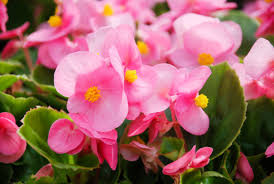
Fibrous-rooted begonias commonly used as annual bedding plants. They have waxy green or bronze leaves and produce abundant small flowers (pink, red, white) throughout the growing season. Derived from South American species.

Begonia x tuberhybrida
Tuberous Begonia
Complex hybrids derived from Andean species, grown for their large, often double, brightly colored flowers (yellow, orange, pink, red, white). They grow from tubers and are popular for containers and hanging baskets in shade. Often dormant in winter.

Hillebrandia sandwicensis
(Hawaiian Begonia - informal)
The only species in its genus and the only member of Begoniaceae native to Hawaii. It differs from Begonia in having a half-inferior ovary and a capsule that opens at the top. It's an erect, tuberous herb found in moist forests, representing a relictual lineage within the family.
Phylogeny and Classification
Begoniaceae belongs to the order Cucurbitales, which also includes the gourd family (Cucurbitaceae) and Datiscaceae. Molecular phylogenetics consistently places Begoniaceae in this order, often suggesting a sister relationship with Datiscaceae (a small family of herbs).
The family exhibits one of the most extreme examples of genus size asymmetry in flowering plants: the genus Begonia contains over 2000 species, while its sister genus Hillebrandia contains only one. This suggests an explosive evolutionary radiation within Begonia after diverging from the lineage leading to Hillebrandia. Understanding the factors driving this massive diversification (e.g., adaptation to diverse microhabitats, pollination mechanisms, polyploidy) is a major focus of research.
Position in Plant Phylogeny
- Kingdom: Plantae
- Clade: Angiosperms (Flowering plants)
- Clade: Eudicots
- Clade: Rosids
- Order: Cucurbitales
- Family: Begoniaceae
Evolutionary Significance
Begoniaceae is a highly significant family for evolutionary studies:
- Hyperdiversification: The genus Begonia is a prime example of rapid species radiation in plants, offering opportunities to study the mechanisms of speciation.
- Morphological Diversity: Exhibits incredible variation in vegetative (especially leaf) and floral morphology within Begonia.
- Asymmetric Development: The characteristic asymmetric leaves provide a model system for studying developmental biology and leaf shape determination.
- Biogeography: Its pantropical distribution with centers of diversity provides insights into historical plant movements and diversification across continents.
- Relictual Lineage: Hillebrandia represents a phylogenetic and geographic relict, preserving ancestral traits and informing the early evolution of the family.