Amborellaceae
Amborella Family
Amborellaceae is a monotypic family of flowering plants, containing only the species Amborella trichopoda. This evergreen shrub or small tree is endemic to the island of New Caledonia and holds extraordinary evolutionary significance: molecular phylogenetic studies consistently place it as the sister lineage to all other living angiosperms, representing the earliest diverging branch of the flowering plant evolutionary tree.
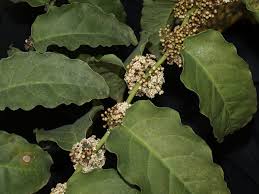
Overview
The family Amborellaceae, and its sole member Amborella trichopoda, is restricted to the understory of moist, montane rainforests on Grande Terre, the main island of New Caledonia in the southwest Pacific. It grows as an evergreen shrub or small tree, typically reaching a few meters in height. The plant is dioecious, with separate male and female individuals.
Amborella possesses a unique combination of traits considered 'primitive' among flowering plants. Notably, its wood lacks vessels, relying entirely on tracheids for water transport, a feature shared only with some ancient gymnosperm lineages and very few other angiosperms. Its flowers are small and relatively simple, with spirally arranged parts rather than distinct whorls of sepals and petals, and female flowers have separate carpels (apocarpy).
The overwhelming significance of Amborellaceae lies in its phylogenetic position. Decades of molecular research across multiple genes and genomes have consistently identified Amborella as the sister group to the remaining ~350,000+ species of flowering plants. Studying Amborella provides crucial insights into the likely characteristics of the earliest angiosperms and the evolutionary origins of key flowering plant traits. It has no direct economic importance but is invaluable for scientific research.
Quick Facts
- Scientific Name: Amborellaceae
- Common Name: Amborella family
- Number of Genera: 1 (Amborella)
- Number of Species: 1 (Amborella trichopoda)
- Distribution: Endemic to New Caledonia (Grande Terre)
- Evolutionary Group: Angiosperms - Amborellales (Sister to all other living angiosperms)
- Current Date: March 29, 2025
Key Characteristics
Growth Form and Habit
Evergreen, dioecious (or functionally dioecious) shrub or small tree, typically sparsely branched. Critically, the wood lacks vessel elements, consisting only of tracheids for water conduction.
Leaves
Leaves are alternate, arranged spirally. They are simple, somewhat leathery (coriaceous), with petioles. The leaf margins are coarsely toothed (serrated) or wavy (undulate). Stipules are absent.
Inflorescence
Flowers are borne in small axillary or terminal cymose or paniculate inflorescences.
Flowers
Flowers are small (usually less than 1 cm diameter), unisexual, actinomorphic (radially symmetrical), and typically whitish or greenish-cream. Floral parts are spirally arranged rather than in distinct whorls.
- Perianth: Consists of 5-8(-11) undifferentiated tepals, spirally arranged, grading from outer bract-like structures to inner petaloid ones.
- Staminate (Male) Flowers: Possess numerous (10-25) stamens, spirally arranged. Filaments are short and somewhat flattened; anthers have embedded pollen sacs (thecae) and dehisce via longitudinal slits. A non-functional pistil (pistillode) is absent.
- Pistillate (Female) Flowers: Usually have 1-2(-5) sterile stamens (staminodes). The gynoecium is apocarpous, consisting of few (typically 5-8) distinct carpels, spirally arranged on the receptacle. Each carpel contains a single pendulous ovule and is unsealed along the adaxial side, with stigmatic tissue forming a crest along this suture. The stigma is sessile or nearly so.
Fruits and Seeds
The fruit is an aggregate of small, ovoid drupelets (or sometimes described as follicle-like drupes), each developing from a single carpel. The drupelets are typically red when ripe.
Each drupelet contains a single seed. The seed has a small embryo surrounded by copious, specialized endosperm.
Chemical Characteristics
Amborella lacks ethereal oil cells, which are common in some other early diverging angiosperm groups (like Austrobaileyales, Magnoliales). It contains proanthocyanidins and lacks alkaloids like berberine. Its chemical profile is relatively simple compared to many other angiosperms.
Field Identification
Identifying Amborellaceae (Amborella trichopoda) relies absolutely on its unique location and combination of 'primitive' angiosperm traits:
Primary Identification Features
- Location: MUST be found in the wild only on Grande Terre, New Caledonia, typically in moist montane rainforest understories.
- Habit: Evergreen shrub or small tree.
- Alternate, Simple Leaves: Leaves spirally arranged, simple blade with coarsely toothed or wavy margins.
- Dioecious: Separate male and female plants.
- Small, Whitish Flowers: Inconspicuous flowers in small clusters.
- Spirally Arranged Tepals: Floral perianth parts not in distinct whorls of sepals/petals.
- Apocarpous Gynoecium (Female Flowers): Female flowers have several distinct, separate carpels (not fused into a single pistil).
- Aggregate of Red Drupelets: Fruit consists of several small, red, fleshy drupelets clustered together.
Secondary Identification Features
- Absence of Stipules.
- Somewhat Leathery Leaf Texture.
- Vesselless Wood: (Requires microscopic examination) A fundamental but not field-observable trait.
Seasonal Identification Tips
- Year-round: The combination of evergreen habit, alternate simple toothed/wavy leaves, and location is indicative.
- Flowering/Fruiting Season: Occurs year-round or seasonally depending on specific conditions. Flowers are small; the aggregate red drupelets are more conspicuous when present.
Common Confusion Points
Within New Caledonia, other understory shrubs/trees exist. Confusion might arise with members of families having simple alternate leaves, but the combination of features is unique:
- Winteraceae: Also possess vesselless wood (in some genera) and occur in similar habitats/regions. However, Winteraceae often have ethereal oils (aromatic leaves/bark), flowers with distinct whorls (though variable), and different carpel/fruit structures.
- Monimiaceae / Atherospermataceae: Can be shrubs/trees with simple leaves (often opposite in Atherospermataceae), but possess vessels, often aromatic, and have very different floral structures (often enclosed within a receptacle) and fruit types.
- Other New Caledonian Flora: Numerous endemic families and genera exist. Identification relies on the specific combination: alternate simple serrated/undulate leaves, vesselless wood, dioecy, small flowers with spiral parts, apocarpous gynoecium, and aggregate drupelet fruit.
Given its unique phylogenetic status and morphology, combined with its restricted endemic location, Amborella is generally unmistakable once its key features are known.
Field Guide Quick Reference
Look For:
- Shrub/small tree (New Caledonia only)
- Evergreen, vesselless wood
- Alternate, simple leaves
- Toothed or wavy leaf margins
- No stipules
- Dioecious (separate M/F plants)
- Small whitish flowers, spiral parts
- Female: Distinct carpels (apocarpous)
- Fruit: Aggregate of red drupelets
Key Variations:
- (Monotypic family - essentially no variation at this level)
- Number of floral parts can vary slightly (tepals, stamens, carpels)
Notable Examples
As Amborellaceae is monotypic, it contains only one species:

Amborella trichopoda
Amborella
The sole representative of the Amborellaceae family and the entire order Amborellales. This unique shrub or small tree, endemic to New Caledonia, holds the distinction of being the sister lineage to all other living flowering plants. Its combination of traits, including vesselless wood and simple flowers with spiral parts, provides critical clues about early angiosperm evolution.

Amborella trichopoda (Flower)
Amborella Flower
The flowers of Amborella are small, unisexual, and relatively simple. This staminate (male) flower shows the numerous, spirally arranged stamens with broad filaments and undifferentiated tepals surrounding them. The lack of distinct sepals and petals is considered an ancestral trait.

Amborella trichopoda (Fruit)
Amborella Fruit
The fruit develops from the apocarpous gynoecium of the female flower. It consists of an aggregate of several small, ovoid, red drupelets, each derived from an individual carpel and containing a single seed. This type of fruit structure is relatively uncommon among angiosperms.
Phylogeny and Classification
The phylogenetic position of Amborellaceae is perhaps its most significant attribute. It occupies its own monotypic order, Amborellales. Decades of molecular phylogenetic research, culminating in whole-genome sequencing, have consistently and robustly identified Amborellales as the sister lineage to all other extant (living) angiosperms. This means that the evolutionary line leading to Amborella diverged before any other currently living flowering plant lineage branched off.
This position makes Amborella an invaluable outgroup for studying the evolution of all other flowering plants. Its genome and characteristics serve as a reference point for understanding the ancestral state of angiosperms and tracing the origin and diversification of key traits like flower structure, vessel elements in wood, genome duplication events, and metabolic pathways that define the vast majority of flowering plants found today. It is not an ancestor itself, but represents the living descendant of the lineage that split off earliest.
Position in Plant Phylogeny
- Kingdom: Plantae
- Clade: Angiosperms (Flowering plants)
- Order: Amborellales
- Family: Amborellaceae
Evolutionary Significance
Amborellaceae (Amborella trichopoda) is arguably one of the most evolutionarily significant plants known:
- Sister Lineage to All Other Angiosperms: Provides the most crucial reference point for understanding the origin and early diversification of flowering plants.
- Insights into Ancestral Traits: Possesses a unique mosaic of traits presumed to be ancestral for angiosperms (e.g., vesselless wood, simple flower structure, apocarpy) alongside its own derived features.
- Genomic Resource: The sequencing of the Amborella genome provides a vital tool for comparative genomics across all flowering plants, helping to unravel gene family evolution and ancient genome duplications.
- Living Fossil?: While not unchanged, it retains features that offer a glimpse into the morphology and genetics of very early angiosperms from the Cretaceous period.
- Endemism and Conservation: Its restriction to New Caledonia highlights the importance of conserving unique island floras that harbor ancient evolutionary lineages.