Adoxaceae
Moschatel Family / Elderberry Family
The Adoxaceae family, commonly known as the Moschatel or Elderberry family, comprises a relatively small group of flowering plants, consisting of five genera and about 200 species. This family includes familiar shrubs like elderberries (Sambucus) and viburnums (Viburnum), as well as the small, unassuming herbaceous plant moschatel (Adoxa).
Overview
Adoxaceae includes mostly shrubs and small trees, but also encompasses a few perennial herbs. The family has a predominantly temperate distribution, primarily in the Northern Hemisphere, but extending into tropical montane regions and South America. Historically, the genera Sambucus and Viburnum were often placed in the Caprifoliaceae (Honeysuckle family), but molecular phylogenetic studies have shown they form a distinct clade with Adoxa, Sinadoxa, and Tetradoxa.
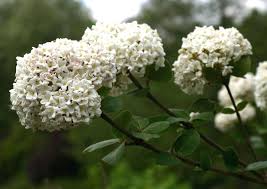
Members of Adoxaceae are characterized by opposite leaves, which are often compound (Sambucus, Adoxa) or simple (Viburnum). The flowers are typically small, radially symmetric (actinomorphic), and arranged in cymose inflorescences, often forming flat-topped clusters (corymbs or umbel-like cymes) or panicles. The fruit is typically a drupe.
Several species within Adoxaceae are economically and ecologically important. Elderberries (Sambucus) are cultivated for their edible fruits (used in jams, wines, and cordials) and flowers (used for teas and flavorings), as well as for medicinal purposes. Viburnums are widely grown as ornamental shrubs for their attractive flowers and foliage. Adoxa moschatellina (Moschatel) is a less conspicuous forest floor herb known for its unique cube-like inflorescence structure.
Quick Facts
- Scientific Name: Adoxaceae
- Common Name: Moschatel family, Elderberry family, Viburnum family
- Number of Genera: 5 (Adoxa, Sambucus, Sinadoxa, Tetradoxa, Viburnum)
- Number of Species: Approximately 200
- Distribution: Primarily Northern Hemisphere temperate regions, also in montane tropics and South America.
- Evolutionary Group: Eudicots - Asterids
- Order: Dipsacales
Key Characteristics
Growth Form and Habit
The family includes shrubs and small trees (most Viburnum and Sambucus species) as well as perennial herbs with rhizomes (Adoxa, Sinadoxa, Tetradoxa). Stems are typically solid, although Sambucus often has stems with a large pith.
Leaves
Leaves are almost always arranged oppositely on the stem. They can be simple and entire, toothed, or lobed (Viburnum), or compound (pinnately compound in Sambucus, ternately compound in Adoxa). Stipules are present in Sambucus (sometimes reduced to glands) but usually absent in Viburnum and Adoxa.
Inflorescence
Flowers are typically borne in terminal or axillary cymose inflorescences. These are often arranged into dense, flat-topped clusters resembling umbels or corymbs (Sambucus, many Viburnum) or sometimes panicles. In Adoxa, the inflorescence is a unique terminal head with typically five flowers (one terminal, four lateral). Some Viburnum species have showy, sterile marginal flowers surrounding fertile inner flowers (e.g., Viburnum opulus).
Flowers
Flowers are generally small, actinomorphic (radially symmetric), and usually bisexual. Key features include:
- Calyx: Small, with 3-5 fused sepals forming short lobes.
- Corolla: Typically rotate (wheel-shaped) or campanulate (bell-shaped), with 3-5 fused petals. Usually white, cream, or pinkish.
- Androecium: Usually 5 stamens (sometimes 3 or 4 in Adoxa), alternate with the corolla lobes, attached to the corolla tube. Anthers open by longitudinal slits.
- Gynoecium: An inferior or semi-inferior ovary, composed of 3-5 fused carpels, but often with only one ovule developing. The style is short or absent, with 3-5 stigmas.
Fruits and Seeds
The fruit is a drupe or drupe-like berry containing 1-5 pits (pyrenes), each derived from a carpel and typically containing a single seed. Fruits are often brightly colored (red, blue, black) and fleshy, aiding in dispersal by birds.
Chemical Characteristics
Members of the family often contain iridoids, saponins, and cyanogenic glycosides (especially in Sambucus, requiring cooking of berries). Tannins are also common. Some species have characteristic scents; Adoxa flowers have a musky scent, contributing to its common name.
Field Identification
Identifying members of Adoxaceae often involves observing habit, leaf arrangement and type, and inflorescence structure. Here are key features to look for:
Primary Identification Features
- Opposite Leaves: This is a consistent feature across the family. Check the point where leaves attach to the stem.
- Habit: Determine if the plant is a shrub/small tree (Viburnum, Sambucus) or a small perennial herb (Adoxa).
- Inflorescence Type: Look for flat-topped or rounded clusters (cymes, often umbel-like) of small flowers. Adoxa has a distinctive terminal head.
- Flower Structure: Small, radially symmetric flowers with 3-5 petals and typically 5 stamens. Ovary is inferior or semi-inferior.
- Fruit Type: Look for fleshy drupes, often brightly colored when mature.
Secondary Identification Features
- Leaf Complexity: Check if leaves are simple (Viburnum) or compound (Sambucus, Adoxa).
- Stipules: Presence (often small or gland-like) in Sambucus, generally absent in Viburnum and Adoxa.
- Stem Pith: Sambucus stems often have a large, soft central pith.
- Sterile Marginal Flowers: Some Viburnum species have enlarged, sterile flowers around the edge of the inflorescence.
- Scent: Crushed leaves of some Sambucus species have an unpleasant odor. Adoxa flowers have a musky scent.
Seasonal Identification Tips
- Spring: Adoxa flowers early. Look for emerging leaves and flower buds on shrubs.
- Late Spring/Summer: Peak flowering time for most Sambucus and Viburnum species. Observe flower structure and inflorescence shape.
- Late Summer/Fall: Fruits mature, providing key identification clues (color, size, arrangement). Leaf shape and arrangement are still visible. Some Viburnum species have notable fall foliage color.
- Winter: Opposite branching pattern, persistent fruit clusters (on some), and bud characteristics can help identify woody species.
Common Confusion Points
- Caprifoliaceae (Honeysuckle Family): Many honeysuckles (Lonicera) also have opposite leaves and sometimes similar flower shapes, but often have tubular corollas and true berries (not drupes). Historically, Sambucus and Viburnum were placed here.
- Cornaceae (Dogwood Family): Dogwoods (Cornus) also have opposite leaves (mostly) and often cymose inflorescences. Flower structure differs (usually 4 petals, distinct styles), and fruits are drupes but often clustered differently. Leaf venation (arcuate veins) is often distinctive in Cornus.
- Hydrangeaceae (Hydrangea Family): Some hydrangeas have opposite leaves and large flower clusters, sometimes with sterile marginal flowers like some Viburnum, but flower details (e.g., number of parts, ovary position) and fruit type (capsule) differ.
Field Guide Quick Reference
Look For:
- Opposite leaves
- Shrub/tree or small herb habit
- Small, 5-parted flowers
- Cymose inflorescences (often flat-topped)
- Drupe fruits
- Inferior/semi-inferior ovary
Key Variations:
- Simple leaves (Viburnum) vs. Compound leaves (Sambucus, Adoxa)
- Presence/absence of stipules
- Inflorescences with or without sterile marginal flowers (Viburnum)
- Unique head-like inflorescence (Adoxa)
- Large pith in stem (Sambucus)
Notable Examples
The Adoxaceae family includes well-known shrubs and the more obscure moschatel.

Sambucus nigra
European Elderberry
A large shrub or small tree native to Europe and western Asia, widely naturalized elsewhere. It has pinnately compound leaves, large flat-topped clusters (corymbs) of creamy-white flowers in early summer, followed by clusters of small, dark purple to black drupes. Both flowers and cooked fruits are used culinarily and medicinally. The similar Sambucus canadensis is native to North America.

Viburnum opulus
Guelder Rose / European Cranberrybush
A deciduous shrub native to Europe, northern Africa, and central Asia. It is known for its simple, palmately lobed leaves (resembling maple leaves) and lacecap-style inflorescences with large, sterile white marginal flowers surrounding small, fertile inner flowers. It produces clusters of bright red, translucent drupes. Cultivars like 'Roseum' (Snowball Bush) have entirely sterile flowers forming large globes.

Adoxa moschatellina
Moschatel / Townhall Clock
A small, delicate perennial herb found in cool, moist woodlands across the Northern Hemisphere. It grows from a rhizome, producing basal leaves and flowering stems typically under 15 cm tall. Leaves are ternately compound. The distinctive inflorescence is a small, terminal cube-like head of 5 inconspicuous greenish-yellow flowers (one facing up, four facing sideways), giving rise to the name "Townhall Clock." Flowers emit a musky scent.

Viburnum dentatum
Arrowwood Viburnum
A common deciduous shrub native to eastern North America. It features simple, opposite leaves with distinctly toothed margins. Creamy-white flowers are borne in flat-topped clusters (cymes) in late spring, lacking the showy sterile flowers of V. opulus. The fruits are blue-black drupes favored by birds. Its straight young stems were historically used for arrow shafts.
Phylogeny and Classification
Adoxaceae belongs to the order Dipsacales within the asterid clade of eudicots. The circumscription of the family has changed significantly with the advent of molecular phylogenetics. Previously, Adoxa was often placed in its own monotypic family (Adoxaceae sensu stricto), while Sambucus and Viburnum were usually included in Caprifoliaceae.
Molecular data strongly supported grouping these three genera, along with the rare Asian genera Sinadoxa and Tetradoxa, into an expanded Adoxaceae (sometimes referred to as Adoxaceae sensu lato). This revised family is now recognized by the Angiosperm Phylogeny Group (APG) system. Viburnum is sister to the rest of the family, which then splits into a clade containing Sambucus and another containing Adoxa, Sinadoxa, and Tetradoxa.
Position in Plant Phylogeny
- Kingdom: Plantae
- Clade: Angiosperms (Flowering plants)
- Clade: Eudicots
- Clade: Asterids
- Order: Dipsacales
- Family: Adoxaceae
Evolutionary Significance
The recognition of Adoxaceae highlights the power of molecular data in resolving phylogenetic relationships that were ambiguous based solely on morphology. The family represents a relatively small lineage within Dipsacales, characterized by predominantly actinomorphic flowers, inferior/semi-inferior ovaries, and drupaceous fruits. Key evolutionary trends within the family include the diversification of growth forms (herb to shrub/tree) and leaf types (simple to compound), as well as variations in inflorescence structure, including the development of sterile marginal flowers in some Viburnum species to enhance pollinator attraction.


