
Vitaceae
Vitaceae, the grape family, is a family of eudicots comprising the single order Vitales, positioned near the base of the Rosid clade. It includes about 16 genera and nearly 1000 species, consisting mostly of lianas (woody or herbaceous vines) that climb using characteristic tendrils located opposite the leaves. Leaves are typically alternate and often palmately lobed or compound. Flowers are small, usually 4- or 5-merous, often clustered in panicle-like cymes, possessing a superior ovary, and developing into a characteristic berry fruit (the grape).
Overview
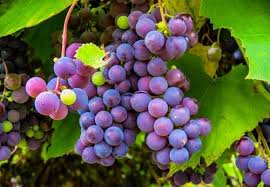
The Grape family has a nearly cosmopolitan distribution, being most diverse in tropical and Northern Hemisphere temperate regions. Its paramount economic significance comes from grapes (genus Vitis), particularly cultivars of Vitis vinifera, which are cultivated globally for wine production, fresh fruit (table grapes), raisins, and juice. Grapes represent one of the world's most valuable fruit crops.
Beyond Vitis, the family includes other well-known genera such as Parthenocissus (Virginia creepers, Boston ivy), often grown as ornamental vines for their climbing ability (using tendrils with adhesive discs) and brilliant fall color, and Ampelopsis (peppervines), also containing ornamental and sometimes weedy vines. The genus Leea, sometimes placed in its own family Leeaceae, consists of shrubs or small trees primarily from the Old World tropics, differing from typical Vitaceae in habit and some floral details but now included based on molecular data.
A key feature aiding recognition is the presence of tendrils used for climbing, which are typically located opposite the leaves at the nodes – a position suggesting they may be modified inflorescences or terminal shoots. The small flowers, often greenish, give rise to the familiar berry fruit. Many species contain raphide crystals (calcium oxalate). In Oklahoma (current location as of March 27, 2025), several native species of wild grapes (Vitis spp.), Virginia Creeper (Parthenocissus quinquefolia), and Peppervine (Ampelopsis arborea) are common vines found in woodlands, thickets, and along fences.
Quick Facts
- Scientific Name: Vitaceae Juss.
- Common Name: Grape family
- Number of Genera: Approximately 16 (incl. Leea)
- Number of Species: Approximately 960
- Distribution: Nearly cosmopolitan, primarily tropical and Northern Hemisphere temperate regions.
- Evolutionary Group: Eudicots - Rosids (Basal Rosid lineage - Vitales)
- Order: Vitales
Key Characteristics
Growth Form and Habit
Predominantly lianas (woody or herbaceous vines) climbing by means of tendrils. Some are shrubs or small trees (notably Leea). Stems often have swollen nodes.
Tendrils
Tendrils are characteristic and typically arise opposite a leaf at the node. They are considered modified shoots or inflorescences. Tendrils can be simple or branched (forked), coiling around supports or, in Parthenocissus, often terminating in adhesive discs that allow climbing on flat surfaces.

Key feature: Tendril located opposite the leaf at the node.
Leaves
Leaves are usually arranged alternately and spirally along the stem. They are simple (but often palmately lobed or veined, like Vitis) or palmately compound (with 3-7 leaflets, e.g., Parthenocissus quinquefolia), rarely pinnately compound (Leea). Margins typically toothed or serrated. Stipules are usually present but often small and deciduous.
Inflorescence
Inflorescences typically appear opposite the leaves (similar position to tendrils, reflecting shared developmental origin). They are usually branched, complex structures, often described as panicles or compound cymes.
Flowers
Flowers are typically small, numerous, usually bisexual or functionally unisexual (plants then often polygamodioecious or dioecious). Actinomorphic (radially symmetric) and typically 4- or 5-merous.
- Calyx: Small, with 4 or 5 minute sepals fused into a small cup or collar, sometimes nearly obsolete.
- Corolla: Typically 4 or 5 distinct (free) petals, usually small and greenish or yellowish. In Vitis, the petals are characteristically coherent (stuck together) at their tips and fall off together as a single cap (calyptra) when the flower opens (anthesis).
- Androecium: Stamens number as many as (usually 4 or 5) and are positioned opposite the petals (a key feature). Filaments are distinct, arising from the base of the ovary or a nectar disc. Anthers open via longitudinal slits.
- Gynoecium: Ovary is superior, composed of typically 2 fused carpels forming 2 locules. Placentation is axile (or appearing basal), with typically 2 ovules per locule. A prominent nectar disc is usually present between the stamens and ovary, often surrounding the ovary base. Style single, usually short and conical; stigma small, capitate or slightly lobed.

Generalized Vitaceae flower: Small, 4-5 merous, petals often falling as a cap (Vitis), stamens opposite petals, prominent nectar disc, superior ovary.
Fruits and Seeds
The characteristic fruit is a berry (specifically, the grape). It develops from the superior ovary and typically contains 1-4 (usually starting with 4 ovules) relatively hard, often pear-shaped seeds. The pulp is fleshy. Seeds contain oily and proteinaceous endosperm and a small embryo.
Chemical Characteristics
Plants often contain tannins, phenolic compounds like resveratrol (notably in grape skins), and organic acids (especially tartaric acid in grapes). Raphide crystals (bundles of needle-like calcium oxalate crystals) are common in tissues. They generally lack the prominent latex, alkaloids, iridoids, or glucosinolates found in some other major orders.
Identification Basics
Identifying Vitaceae usually relies on recognizing the vining habit with tendrils opposite the leaves, combined with leaf shape and the berry fruit.
Primary Identification Features
- Vining Habit (Mostly): Lianas climbing with tendrils.
- Tendrils Opposite Leaves: Tendrils arise from the node on the opposite side of the stem from the leaf petiole.
- Alternate Leaves: Simple (often palmately lobed/veined) or palmately compound leaves arranged alternately.
- Small 4- or 5-merous Flowers: Often in panicle/cyme-like clusters opposite leaves.
- Stamens Opposite Petals: Usually 4 or 5 stamens positioned opposite the petals.
- Superior Ovary: With prominent nectar disc at base.
- Fruit a Berry (Grape): Fleshy fruit containing 1-4 hard seeds.
Secondary Identification Features
- Petals Falling as a Cap: Coherent petals shed together (Vitis).
- Tendril Tips: Simple coiling vs. branched vs. adhesive discs (Parthenocissus).
- Leaf Shape: Simple/lobed (Vitis, Ampelopsis) vs. Palmately compound (Parthenocissus).
- Woody vs. Herbaceous Vine: Most are woody.
- Presence of Raphides: Can cause mild irritation if handled extensively.
Seasonal Identification Tips
- Growing Season: Alternate leaves and opposite tendrils are key vegetative features. Flowers appear late spring/early summer.
- Late Summer/Fall: Berries (grapes) mature and are highly characteristic. Fall color can be spectacular, especially the bright reds of Parthenocissus.
- Winter: Woody vines are visible; tendril position opposite leaf scars can still be observed. Bud shape and bark may help.
- (Oklahoma Context: Native Vitis, Parthenocissus, and Ampelopsis vines are common in woodlands, thickets, and fencerows. Their leaves, tendrils, and fruits are readily observable during appropriate seasons).
Common Confusion Points
- Cucurbitaceae (Gourd Family): Herbaceous vines with tendrils and alternate palmate leaves. Key differences: Tendrils arise laterally at node (not opposite leaf); flowers usually unisexual, large, yellow/orange; ovary inferior; fruit a pepo.
- Passifloraceae (Passion Flower Family): Vines with tendrils and alternate lobed leaves. Key differences: Tendrils usually axillary (not opposite leaf); flowers highly complex with corona; ovary superior but often stalked; fruit a berry or capsule.
- Convolvulaceae (Morning Glory Family): Herbaceous vines with alternate leaves (often heart-shaped). Key differences: Lack tendrils (twine with stems); flowers bisexual, funnel-shaped, superior ovary; fruit a capsule.
- Menispermaceae (Moonseed family): Woody vines, alternate simple leaves (often lobed). Key differences: Lack tendrils; flowers small, unisexual, usually 6-merous; fruit a drupe with crescent-shaped seed.
The position of the tendrils opposite the leaves is the most distinctive and reliable field mark for identifying Vitaceae.
Field Guide Quick Reference (Vitaceae)
Look For:
- Vining habit (liana), climbing with tendrils
- Tendrils positioned OPPOSITE leaves
- Leaves alternate, often palmately lobed or compound
- Flowers small, 4-5 merous, often in clusters opposite leaves
- Stamens 4-5, opposite petals
- Ovary superior, often with nectar disc
- Fruit a berry (grape)
Key Genus Clues:
- Vitis: Simple lobed leaves; tendrils often forked, lack discs; petals fall as cap
- Parthenocissus: Palmately compound leaves (or simple lobed); tendrils branched, often with adhesive discs
- Ampelopsis: Simple or compound leaves; tendrils lack discs; fruit often inedible/different colors
- Leea: Shrub/tree; compound leaves; tendrils absent; different floral structure (sometimes separate family)
Representative Genera
The Grape family includes economically vital fruit crops and common ornamental or native vines.

Vitis (e.g., V. vinifera, V. riparia)
Grapes
Woody lianas with simple, often palmately lobed leaves and forked tendrils opposite leaves. Flowers small, greenish; petals fall off as a cap (calyptra). Fruit is the familiar grape berry. Includes V. vinifera (wine/table grapes) and numerous native North American species like V. riparia (Riverbank Grape, native OK), used for juice, jams, and rootstock.

Parthenocissus (e.g., P. quinquefolia)
Virginia Creeper, Boston Ivy
Woody lianas climbing via tendrils that typically terminate in adhesive discs, allowing them to cling to flat surfaces. Leaves alternate, palmately compound (usually 5 leaflets in P. quinquefolia, native OK) or simple and lobed (P. tricuspidata - Boston Ivy). Known for brilliant red fall color. Fruit a small, dark blue berry.

Ampelopsis (e.g., A. arborea)
Peppervine / Buckvine
Woody or herbaceous vines climbing with tendrils (lacking adhesive discs). Leaves alternate, highly variable: simple and lobed or 1-3 times pinnately or palmately compound, even on the same plant. Flowers small, greenish. Fruit a small berry, often inedible and changing color (green to pink to blue/black). A. arborea is native to southeastern US including Oklahoma.

Cissus
Grape Ivy, etc.
A large genus (~350 spp.) of primarily tropical and subtropical vines, some herbaceous, some woody, some succulent. Leaves simple or compound. Tendrils opposite leaves. Flowers typically 4-merous. Fruit a berry. Includes some species grown as houseplants (e.g., Grape Ivy - C. rhombifolia).

Leea
Leea
Genus of shrubs or small trees, primarily Old World tropics. Unique within Vitaceae (or sometimes placed in own family Leeaceae) for its non-vining habit and pinnately compound leaves. Lacks tendrils. Flowers 5-merous, distinctive structure with staminodial tube. Fruit a berry.
Phylogeny and Classification
Vitaceae holds a unique phylogenetic position. It is the sole family in the order Vitales, which molecular data places as the sister group to all other Rosids (Fabids + Malvids). This means Vitaceae represents an early diverging lineage within the vast Rosid clade, branching off before the diversification of major orders like Rosales, Fabales, Malvales, Myrtales, etc. This placement highlights its distinct evolutionary history.
The inclusion of the genus Leea (formerly often family Leeaceae) within Vitaceae is supported by APG classifications based on molecular evidence, although Leea differs significantly in its shrubby/tree habit, compound leaves, and lack of tendrils. Within the core vining Vitaceae, relationships between genera like Vitis, Parthenocissus, Ampelopsis, and Cissus have been clarified by molecular studies. Key evolutionary features include the development of the tendril opposite the leaf (a defining trait), the characteristic floral structure with stamens opposite petals, and the berry fruit type, which facilitated dispersal by animals and ultimately human cultivation.
Position in Plant Phylogeny
- Kingdom: Plantae
- Clade: Angiosperms (Flowering plants)
- Clade: Eudicots
- Clade: Rosids
- Order: Vitales
- Family: Vitaceae (incl. Leeaceae)
- (Vitales is sister to all other Rosids)
Evolutionary Significance
Vitaceae is crucial for understanding the early evolution and diversification of the massive Rosid clade. Its position as sister to all other Rosids makes it a key reference point for studying ancestral traits and evolutionary transitions within this major eudicot lineage. The evolution of the highly successful vining habit, coupled with the unique tendril position (opposite the leaf), represents a significant morphological innovation. The characteristic floral structure with stamens opposite the petals is also noteworthy. Furthermore, the long history of human cultivation and selection, especially within Vitis vinifera, provides a powerful model for studying domestication and artificial selection.


