Sphenocleaceae
Gooseweed Family
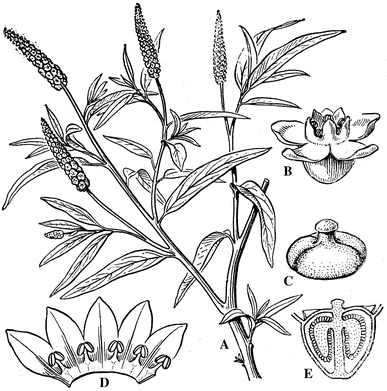
Sphenocleaceae is a monotypic family of flowering plants containing only the species Sphenoclea zeylanica (Gooseweed). This annual herb, found in wet, disturbed habitats throughout the tropics, belongs to the order Solanales. It is easily recognized by its dense, cone-like spike inflorescence bearing numerous small flowers with semi-inferior ovaries that develop into circumscissile capsules.
Overview
The Sphenocleaceae family consists of just a single genus, Sphenoclea, with a single species, Sphenoclea zeylanica. This plant, commonly known as Gooseweed or Wedgeleaf, is an erect annual herb adapted to wet environments. It thrives in disturbed, waterlogged soils such as rice paddies, ditches, marshes, and riverbanks.
Native range is likely in the Old World tropics (Africa or Asia), but Sphenoclea zeylanica has become a widespread pantropical weed, often considered problematic in rice cultivation. Phylogenetically, the family belongs to the order Solanales, placing it within the Lamiid clade of Asterids, alongside major families like Solanaceae (nightshades) and Convolvulaceae (morning glories). It represents a distinct, early-diverging lineage within this order.
The most striking feature of Gooseweed is its dense, cylindrical, cone-like spike inflorescence, which bears numerous small, tightly packed flowers. These develop into characteristic capsules that open via a lid (circumscissile dehiscence).
Quick Facts
- Scientific Name: Sphenocleaceae
- Common Name: Gooseweed family
- Number of Genera: 1 (Sphenoclea)
- Number of Species: 1 (Sphenoclea zeylanica)
- Distribution: Pantropical (weed; likely Old World native)
- Evolutionary Group: Eudicots - Asterids - Lamiids - Solanales
Key Characteristics
Growth Form and Habit
Sphenoclea zeylanica is an erect annual herb, typically growing 0.2 to 1.5 meters tall. Stems are often somewhat fleshy or succulent and may become hollow. It grows in wet soil or shallow water.
Leaves
Leaves are arranged alternately along the stem. They are simple, typically lanceolate to elliptic in shape, with short petioles and entire (smooth) margins. Stipules are absent (exstipulate).
Inflorescence
The inflorescence is highly characteristic: a very dense, cylindrical, cone-like or sausage-shaped terminal or leaf-opposed spike. The small flowers are sessile (stalkless) and tightly packed in the axils of prominent, persistent bracts.
Flowers
Flowers are small, radially symmetrical (actinomorphic), and bisexual (perfect). Key floral features include:
- Calyx: Consists of 5 sepals, fused at the base and strongly fused (adnate) to the ovary wall. The 5 sepal lobes are persistent and visible crowning the fruit.
- Corolla: Consists of 5 petals fused (sympetalous) into a short bell-shaped or urn-shaped tube with 5 small lobes. The corolla is typically whitish or yellowish and deciduous (falls off after flowering).
- Androecium: There are 5 stamens, alternating with the corolla lobes. The filaments are short and attached to the base of the corolla tube (epipetalous).
- Gynoecium: The pistil consists of 2 fused carpels (syncarpous). The ovary is positioned semi-inferiorly to nearly inferiorly (mostly below the level of perianth attachment). It is divided into 2 chambers (bilocular), each containing numerous ovules on swollen axile placentas. A single short style terminates in a capitate (head-like) or slightly 2-lobed stigma.
Fruits and Seeds
The fruit is a small capsule that exhibits circumscissile dehiscence (also called a pyxidium) – it opens transversely like a lid popping off around its circumference. The capsule is crowned by the persistent calyx lobes and contains numerous tiny seeds.
Chemical Characteristics
The family is not particularly noted for distinctive secondary metabolites, unlike some other families in the Solanales (e.g., alkaloids in Solanaceae).
Field Identification
Identifying Sphenoclea zeylanica relies heavily on its distinctive habitat and inflorescence:
Primary Identification Features
- Habitat: Look for an erect annual herb growing in wet, disturbed places like rice paddies, ditches, pond margins, and marshes, primarily in tropical or subtropical regions.
- Inflorescence: The most diagnostic feature is the very dense, cylindrical, cone-like spike composed of numerous small, tightly packed flowers or fruits.
- Leaves: Note the alternate, simple, entire, exstipulate leaves.
- Habit: Stems are often somewhat succulent.
- Fruit: Examine the spike closely (may need magnification) for small capsules opening via a lid (circumscissile), crowned by 5 persistent calyx lobes.
- Ovary Position: Flowers have a semi-inferior to inferior ovary (perianth parts attach near the top of the ovary).
Secondary Identification Features
- Flowers: Small, whitish/yellowish, 5-merous (5 sepals, 5 fused petals, 5 stamens).
- Bracts: Prominent bracts subtending each flower/fruit in the spike.
Seasonal Identification Tips
- Growing Season: As an annual, it appears during the wet or warm season suitable for growth in its habitat.
- Flowering/Fruiting: The dense spikes are present during the reproductive phase and are the most recognizable feature.
Common Confusion Points
- Amaranthaceae (Amaranth family): Some amaranths are weeds with dense spikes. Differ in having minute flowers usually lacking petals, often with dry/papery bracts, superior ovaries, and fruit typically a utricle or achene.
- Plantaginaceae (Plantain family): Plantago species have dense spikes, but flowers are 4-merous with papery corollas and superior ovaries. Aquatic members differ greatly in habit.
- Polygonaceae (Buckwheat family): Wetland members like Persicaria have dense spikes/racemes but are easily distinguished by the presence of an ocrea (sheath at nodes) and flowers with tepals (not distinct sepals/petals) surrounding a superior ovary (fruit an achene).
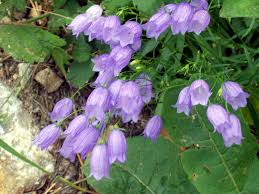
- Campanulaceae (Bellflower family): Some have inferior ovaries, but flowers are usually larger, often blue/purple and bell-shaped, spikes are less dense/cone-like, and capsule dehiscence is typically by pores or valves.
Field Guide Quick Reference
Look For:
- Annual herb in wet habitat
- Stems often succulent
- Leaves alternate, simple, entire
- Dense, cone-like spike inflorescence
- Small, 5-merous flowers
- Ovary semi-inferior/inferior
- Fruit a circumscissile capsule
Key Distinctions:
- Dense spike + Inferior ovary + Circumscissile capsule
- No ocrea (vs. Polygonaceae)
- Distinct (though small) corolla (vs. Amaranthaceae)
- Ovary inferior (vs. Plantago, Polygonaceae, Amaranthaceae)
Notable Examples
The Sphenocleaceae family is monotypic, containing only one species:

Sphenoclea zeylanica
Gooseweed, Wedgeleaf, Chicken Spike
The sole representative of its family, Gooseweed is an erect annual herb common in wet, disturbed areas like rice paddies and ditches throughout the tropics and subtropics worldwide. It features somewhat succulent stems, alternate simple leaves, and is most easily identified by its very dense, cylindrical spike of numerous small flowers that develop into circumscissile capsules.
Phylogeny and Classification
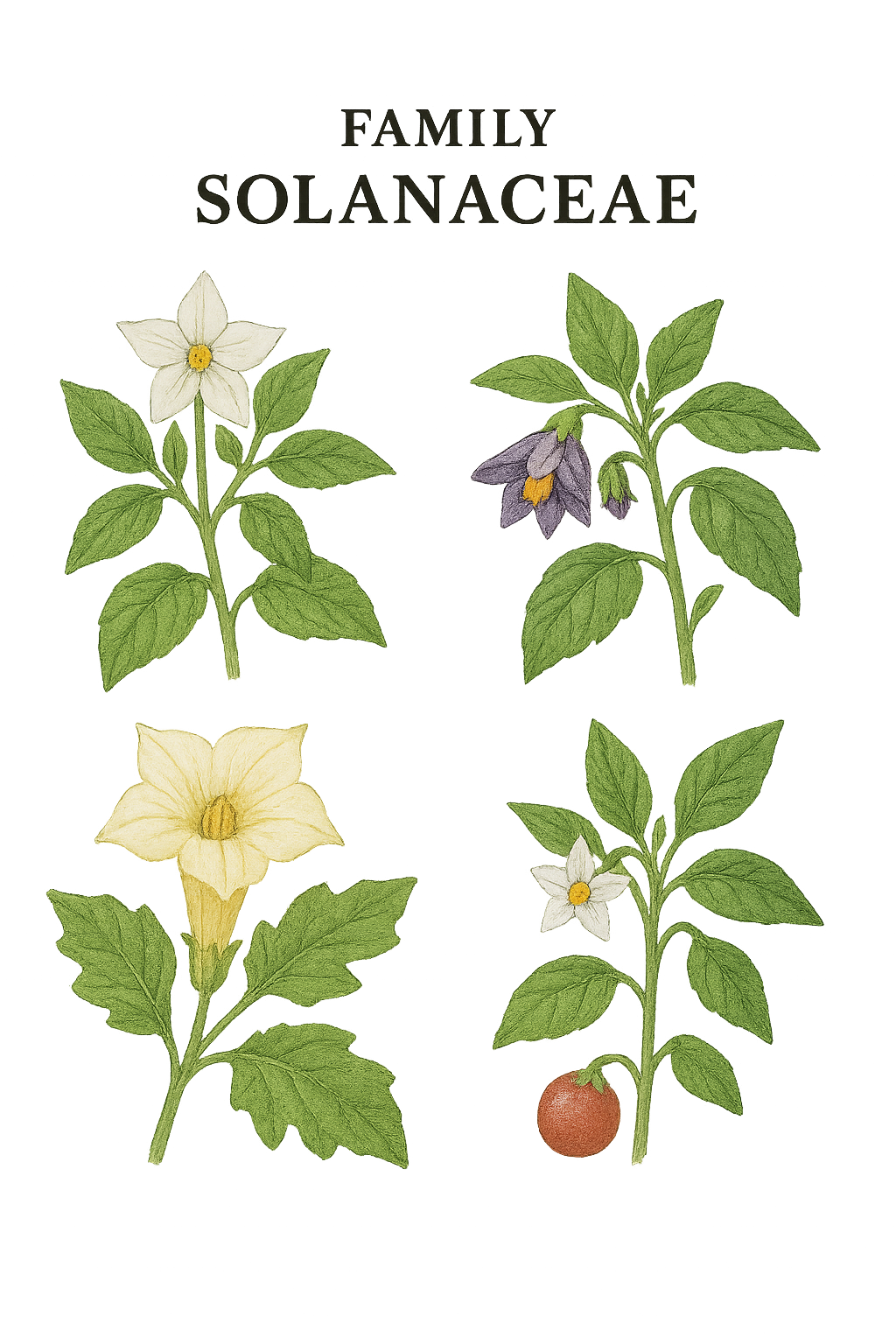
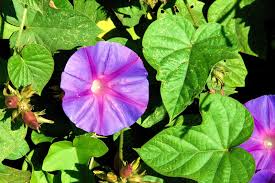
Sphenocleaceae is placed within the order Solanales, a major group within the Lamiid clade of Asterids. This order is well-known for including large and economically important families such as Solanaceae (nightshade family: potato, tomato, tobacco, peppers) and Convolvulaceae (morning glory family: sweet potato, bindweeds).
Molecular phylogenetic studies have robustly placed Sphenocleaceae within Solanales, but often as a distinct lineage diverging early within the order. It is frequently resolved as the sister group to the rest of the Solanales clade (which includes Solanaceae, Convolvulaceae, Montiniaceae, and Hydroleaceae). This phylogenetic position highlights its unique evolutionary trajectory and explains why its morphology (e.g., dense spike, semi-inferior ovary, circumscissile capsule) differs significantly from the more typical features of families like Solanaceae or Convolvulaceae.
Position in Plant Phylogeny
- Kingdom: Plantae
- Clade: Angiosperms (Flowering plants)
- Clade: Eudicots
- Clade: Asterids
- Clade: Lamiids
- Order: Solanales
- Family: Sphenocleaceae
Evolutionary Significance
The Sphenocleaceae family is significant for:
- Basal Lineage in Solanales: Its position as an early diverging lineage is crucial for understanding the ancestral traits and subsequent evolution of the entire Solanales order.
- Unique Morphology: Exhibits a unique combination of features (dense spike, semi-inferior ovary, circumscissile capsule) not found in its close relatives, highlighting morphological diversification early in the order's history.
- Adaptation to Wetlands: Represents a specialization towards wet, disturbed habitats within an order containing diverse ecological strategies.
- Monotypic Status: Being a family with only one species underscores its evolutionary distinctiveness.