Onagraceae
Evening Primrose Family / Willowherb Family
The Onagraceae family, commonly known as the evening primrose or willowherb family, comprises about 22 genera and over 650 species of herbs, shrubs, and occasionally small trees. They are known for their often showy, 4-parted flowers and are found predominantly in temperate and subtropical regions, with a center of diversity in western North America.
Overview
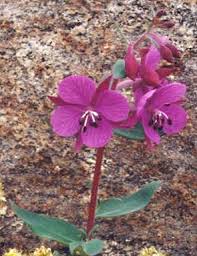
The Onagraceae family is characterized by its flowers, which are typically tetramerous (having parts in fours - 4 sepals, 4 petals, usually 8 stamens) and possess an inferior ovary. Many species, particularly in the genus Oenothera, have flowers that open in the evening or at night, hence the common name "evening primrose." The family includes popular garden ornamentals like Fuchsia and Clarkia, as well as widespread wildflowers like willowherbs (Epilobium).
Onagraceae plants inhabit a variety of environments, from wetlands (Ludwigia) to dry, open areas and forests. Their evolutionary history is linked to adaptations for diverse pollinators, including moths, bees, hummingbirds, and hawkmoths. Pollen grains in many species are connected by distinctive viscin threads, which aid in pollen transfer.
Economically, the family is primarily important for horticulture, with numerous cultivars of Fuchsia, Oenothera, Clarkia, and Gaura grown as ornamentals. Evening primrose oil, extracted from the seeds of Oenothera biennis, is used as a dietary supplement and in traditional medicine.
Quick Facts
- Scientific Name: Onagraceae
- Common Name: Evening Primrose family, Willowherb family
- Number of Genera: Approximately 22
- Number of Species: Approximately 650
- Distribution: Worldwide, primarily in temperate and subtropical regions, especially western North America and South America.
- Evolutionary Group: Eudicots - Rosids - Myrtales
Key Characteristics
Growth Form and Habit
Most members of Onagraceae are annual or perennial herbs, though some are shrubs (e.g., Fuchsia) or small trees. Aquatic herbs are also represented (e.g., Ludwigia). Stems are typically erect or ascending, sometimes branched.
Leaves
Leaves are usually simple and can be arranged alternately, oppositely, or sometimes whorled, often varying along the same stem. Leaf margins are typically entire or toothed (dentate or serrate). Stipules are usually present but often small and deciduous (falling off early), or absent in some groups.
Inflorescence
Flowers can be solitary in leaf axils or arranged in various types of inflorescences, such as racemes, spikes, or panicles. The inflorescence structure can vary significantly between genera.
Flowers
Flowers are the most defining feature, typically being bisexual, actinomorphic (radially symmetrical) or sometimes slightly zygomorphic (bilaterally symmetrical), and characteristically 4-merous (parts in fours), though 2-merous or 5-merous flowers occur rarely.
- Hypanthium: A floral tube (hypanthium) is usually present, extending above the ovary, with sepals, petals, and stamens attached to its rim. The length and shape of the hypanthium vary greatly.
- Calyx: Typically 4 sepals, often reflexed (bent backwards) at maturity.
- Corolla: Typically 4 petals, distinct (not fused), often notched or lobed at the apex, and frequently clawed (narrowed at the base). Petals can be showy and range in color from white, yellow, pink, red, to purple. Some species lack petals.
- Androecium: Usually 8 stamens in two whorls of four, though sometimes only 4 stamens are present. Anthers typically open by longitudinal slits. Pollen grains are often connected by fine, sticky threads called viscin threads.
- Gynoecium: The ovary is inferior, composed of typically 4 fused carpels forming 4 locules (chambers), although sometimes fewer. It contains numerous ovules on axile placentation. There is a single style, often elongated, topped by a stigma that can be capitate (head-like), club-shaped, or have 4 distinct lobes (often cross-shaped).
Fruits and Seeds
The fruit is typically a loculicidal capsule (splitting along the midribs of the carpels), but can also be an indehiscent nutlet or berry-like (e.g., Fuchsia). Capsules often contain numerous small seeds. Seeds may have a tuft of hairs (coma) aiding in wind dispersal (e.g., Epilobium, Chamerion) or lack specialized appendages.
Chemical Characteristics
Onagraceae plants often contain raphides (needle-shaped crystals of calcium oxalate) in their tissues. Some species, like Oenothera, are known for producing gamma-linolenic acid (GLA) in their seed oils. Flavonoids and tannins are also common secondary metabolites within the family.
Field Identification
Identifying members of the Onagraceae family often relies on examining the flower structure. Here are key features to look for:
Primary Identification Features
- 4-parted flowers: Look for flowers with 4 sepals, 4 petals (often notched), and typically 8 stamens. This tetramerous condition is highly characteristic.
- Inferior ovary: The ovary is located below the attachment point of the sepals, petals, and stamens. Often visible as a swelling beneath the flower.
- Hypanthium: Check for the presence of a floral tube (hypanthium) extending above the ovary. Its length can vary from very short to long and slender.
- 4-lobed stigma: Many species have a distinctive stigma divided into 4 linear or club-shaped lobes, often forming a cross shape.
Secondary Identification Features
- Leaf arrangement: Note if leaves are alternate, opposite, or whorled.
- Seed dispersal structures: Look for capsules splitting open or seeds with hairy tufts (coma), especially in Epilobium and Chamerion.
- Viscin threads: While microscopic, clumps of pollen sticking together might suggest the presence of viscin threads.
- Evening opening flowers: Flowers opening late in the day or evening are characteristic of many Oenothera species.
- Habitat: Consider the habitat, as some genera are characteristic of wetlands (Ludwigia) or disturbed areas (Oenothera, Epilobium).
Seasonal Identification Tips
- Spring/Summer: This is the primary flowering season for most Onagraceae. Focus on flower structure (number of parts, ovary position, stigma shape).
- Late Summer/Fall: Look for developing or mature fruits (capsules, berries) and seeds. The presence of a coma on seeds is diagnostic for some genera. Basal rosettes may persist in some perennial species.
- Winter: Dried stems with persistent capsules might be identifiable, especially if characteristic seed types are present.
Common Confusion Points
- Brassicaceae (Mustard family): Also often have 4 petals, but flowers are typically arranged in racemes, have 6 stamens (4 long, 2 short), and a superior ovary producing a silique or silicle fruit.
- Rosaceae (Rose family): Some Rosaceae have 4 petals (e.g., some Potentilla), but they usually have numerous stamens and often a superior or partially inferior ovary, lacking the distinct 4-lobed stigma and hypanthium structure of many Onagraceae.
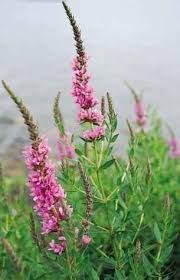
- Lythraceae (Loosestrife family): Also in the order Myrtales. Flowers can be 4-6 merous, but typically have a superior ovary (sometimes partially inferior) and often wrinkled petals.
Field Guide Quick Reference
Look For:
- Flowers usually with 4 sepals & 4 petals
- Typically 8 stamens
- Inferior ovary (below flower parts)
- Floral tube (hypanthium) often present
- Stigma often 4-lobed
- Fruit usually a capsule
Key Variations:
- Flowers opening in evening (Oenothera)
- Berry-like fruit (Fuchsia)
- Seeds with hairy tufts (Epilobium, Chamerion)
- Aquatic habit (Ludwigia)
- Showy, often pink/purple flowers (Clarkia, Fuchsia)
- Yellow flowers common (Oenothera, some Ludwigia)
Notable Examples
The Onagraceae family includes well-known wildflowers and popular garden plants. Here are some notable examples:

Oenothera biennis
Common Evening Primrose
A biennial herb native to North America, known for its large, yellow flowers that open in the evening and close the next morning. It colonizes disturbed ground and fields. The seeds are the source of evening primrose oil, valued for its gamma-linolenic acid (GLA) content.

Fuchsia magellanica
Hardy Fuchsia
A species of shrub native to southern South America, widely cultivated as an ornamental for its distinctive, pendulous flowers with bright red sepals and purple petals. Unlike many cultivated fuchsias, this species is relatively hardy. The fruit is an edible, dark purple berry.

Epilobium angustifolium (syn. Chamerion angustifolium)
Fireweed / Rosebay Willowherb
A tall perennial herb common in temperate Northern Hemisphere regions, especially known for rapidly colonizing areas cleared by fire or logging. It produces tall spikes of showy pink-purple flowers. The seeds have silky hairs (coma) that aid wind dispersal.

Clarkia amoena
Farewell to Spring / Godetia
An annual wildflower native to coastal western North America. It is popular in cultivation for its showy, cup-shaped flowers in shades of pink, salmon, red, and lavender, often with contrasting blotches at the base of the petals. Flowers bloom in late spring and early summer.

Ludwigia peploides
Floating Primrose-willow
An aquatic or semi-aquatic perennial herb found in wetlands, ponds, and slow-moving water. It forms dense mats with floating or creeping stems, simple leaves, and bright yellow, 5-petaled flowers (an exception to the typical 4-merous rule in the family). It can be invasive outside its native range.

Gaura lindheimeri (syn. Oenothera lindheimeri)
White Gaura / Beeblossom
A perennial herb native to Texas and Louisiana, widely cultivated as an ornamental for its airy sprays of delicate white or pink flowers that resemble small butterflies fluttering on long, thin stems. It blooms over a long period from spring to fall.
Phylogeny and Classification
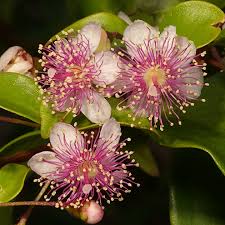
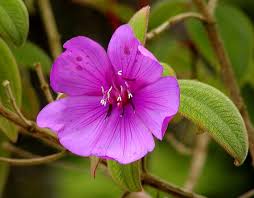
Onagraceae belongs to the order Myrtales, within the rosid clade of eudicots. This order also includes prominent families like Myrtaceae (myrtle family), Lythraceae (loosestrife family), and Melastomataceae. Molecular studies suggest Onagraceae is sister to the Lythraceae.
The family is thought to have originated in the Late Cretaceous period. Its diversification, particularly in genera like Oenothera and Fuchsia, occurred later, likely driven by adaptation to different pollinators and environments. The family is divided into two subfamilies, Ludwigioideae (containing only Ludwigia) and Onagroideae (containing all other genera).
Position in Plant Phylogeny
- Kingdom: Plantae
- Clade: Angiosperms (Flowering plants)
- Clade: Eudicots
- Clade: Rosids
- Order: Myrtales
- Family: Onagraceae
Evolutionary Significance
The Onagraceae family showcases several interesting evolutionary trends:
- Floral diversification: Wide variation in flower size, shape, color, and pollination syndromes (moth, bee, hummingbird pollination).
- Hypanthium evolution: The development and elongation of the floral tube (hypanthium) is a key feature linked to specific pollinators.
- Pollen evolution: The presence of viscin threads connecting pollen grains is a unique adaptation for efficient pollen transfer.
- Polyploidy and hybridization: These processes have played significant roles in the evolution and speciation within genera like Oenothera and Epilobium. Oenothera is particularly famous for its unusual genetic system involving permanent translocation heterozygosity.
- Adaptive radiation: The family has successfully radiated into diverse habitats, from aquatic environments to arid lands and high altitudes.