Nothofagaceae
Southern Beech Family
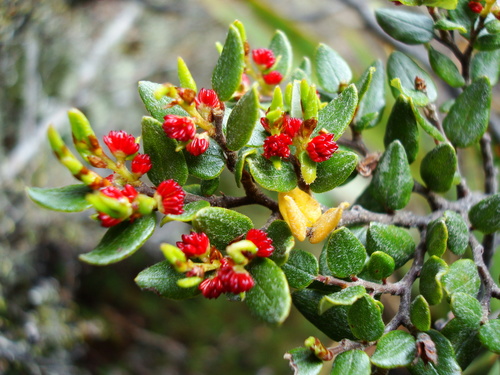
Nothofagaceae is a family of deciduous and evergreen trees and shrubs containing the single genus Nothofagus, commonly known as southern beeches. Placed in the order Fagales within the Rosids clade (Fabids), the family comprises about 35-40 species restricted to the Southern Hemisphere, specifically South America and Australasia. They are ecologically dominant trees in many temperate forests of these regions, characterized by simple, alternate leaves, small unisexual flowers, and nut fruits enclosed in a woody cupule.
Overview
The Nothofagaceae family consists solely of the genus Nothofagus, with about 35-40 species of southern beeches. These trees and shrubs are keystone species in temperate forests and subalpine woodlands across southern South America (Chile, Argentina), New Zealand, southeastern Australia (including Tasmania), New Guinea, and New Caledonia. Their distribution pattern is a classic example reflecting the breakup of the ancient supercontinent Gondwana.
Historically, Nothofagus was included within the Fagaceae (the oak and Northern Hemisphere beech family) based on morphological similarities like the cupule enclosing the nuts. However, significant differences in pollen morphology, wood anatomy, leaf structure, genetics, and biogeography, strongly supported by molecular data, led to its segregation into the distinct family Nothofagaceae within the same order, Fagales.
Southern beeches are ecologically and economically important. They form extensive forests, providing habitat for numerous species. Their timber is valued locally, and some species are used in horticulture. They are also crucial subjects for studying biogeography, paleobotany, and forest ecology in the Southern Hemisphere.
Quick Facts
- Scientific Name: Nothofagaceae Kuprian.
- Common Name: Southern Beech family
- Number of Genera: 1 (Nothofagus)
- Number of Species: Approximately 35-40
- Distribution: Southern Hemisphere temperate: S South America, New Zealand, SE Australia, Tasmania, New Guinea, New Caledonia.
- Evolutionary Group: Eudicots - Rosids - Fabids - Fagales
Key Characteristics
Growth Form and Habit
Deciduous or evergreen trees, sometimes shrubs. Bark is often smooth or scaly.
Leaves
Leaves are alternate, simple, typically small to medium-sized, with margins usually toothed or crenate (rarely entire). Leaves are often plicate (folded fan-like) in bud. Stipules are present, typically peltate (shield-like) and falling early (caducous).
Inflorescence
Flowers are borne in small, inconspicuous clusters (dichasia) in leaf axils, not typically forming long catkins like many other Fagales.
Flowers
Flowers are small, unisexual (plants usually monoecious, sometimes dioecious), wind-pollinated, and lack petals (apetalous). Key features include:
- Male Flowers: Usually solitary or in clusters of up to 5. Perianth (calyx) is typically bell-shaped with 4-6 lobes. Stamens are 6 to numerous (up to 90), with slender filaments and small anthers. A pistillode is absent.
- Female Flowers: Typically occur in clusters of 1-3 (sometimes more), surrounded by an involucre of bracts that develops into the cupule. Perianth is reduced, 4-6 lobed, adnate to the ovary. Ovary is inferior, composed of 2-3 fused carpels, with as many locules. Each locule contains 2 pendulous ovules. Styles are distinct, as many as carpels, with decurrent stigmas.
Fruits and Seeds
The fruit consists of 1-3 (or more) small nuts (or sometimes small, winged samaras), enclosed within a woody cupule derived from the involucre of bracts. The cupule typically splits open by 2-4 valves at maturity to release the nuts. Nuts are often triangular or flattened. Seeds contain large, oily cotyledons and lack endosperm.
Chemical Characteristics
Contain tannins and various phenolic compounds. Lack the specific aromatic resins of Myricaceae or Juglandaceae. Ectomycorrhizal associations are common and important for nutrient uptake.
Field Identification
Identifying Nothofagaceae (Nothofagus) relies on recognizing their tree/shrub habit, characteristic simple, alternate, often small and toothed leaves, inconspicuous flowers, and distinctive nut fruits enclosed in a valved woody cupule, combined with their specific Southern Hemisphere temperate distribution.
Primary Identification Features
- Habit: Deciduous or evergreen trees/shrubs.
- Leaves: Alternate, simple, typically small, usually toothed or crenate, often plicate in bud.
- Sexuality: Usually monoecious.
- Flowers: Small, unisexual, apetalous, wind-pollinated, in axillary clusters.
- Ovary (Female Flowers): Inferior, 2-3 carpels.
- Fruit: 1-3 small nuts (or samaras) enclosed in a woody, valved cupule.
- Distribution: Southern Hemisphere temperate forests only (S America, Australasia).
Secondary Identification Features
- Stipules: Peltate, caducous (falling early).
- Male Flowers: Bell-shaped perianth, numerous stamens.
- Female Flowers: Surrounded by bracts forming the cupule.
- Bark: Often smooth or horizontally peeling/lenticellate.
Seasonal Identification Tips
- Year-round: Tree/shrub habit, bark characteristics, and leaf shape (especially the small size and toothed margins) are useful year-round. Distribution is a key clue.
- Flowering Season: Flowers appear in spring, but are small and inconspicuous (wind-pollinated).
- Fruiting Season: The distinctive cupules containing the nuts mature in late summer or fall and are highly diagnostic. Empty, opened cupules may persist on branches or the ground.
Common Confusion Points
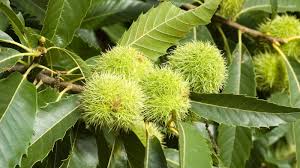
- Fagaceae (Beech/Oak Family): Closely related, but Fagus (Northern Hemisphere beech) has larger, entire or sparsely toothed leaves and a different cupule structure. Oaks (Quercus) have lobed leaves (usually) and acorns (nut with a scaly cup, not fully enclosed). Chestnuts (Castanea) have spiny burs. Fagaceae are primarily Northern Hemisphere.
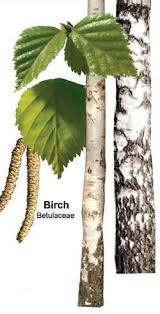
- Betulaceae (Birch Family): Also in Fagales, but leaves are typically doubly serrated, and fruits are small winged nutlets in catkins (birch, alder) or nuts in leafy bracts (hazel, hornbeam), lacking a woody cupule enclosing the nuts.
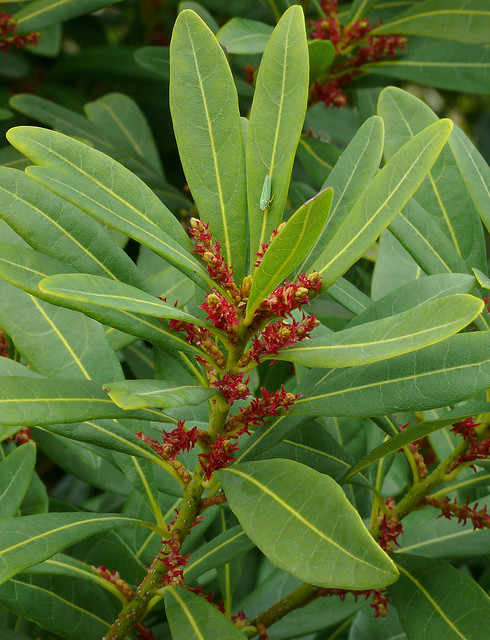
- Other Southern Hemisphere Trees: Many unrelated trees share the habitat, but lack the combination of alternate simple toothed leaves, monoecy, reduced flowers, inferior ovary, and nuts enclosed in a valved cupule (e.g., some Cunoniaceae, Proteaceae, Myrtaceae have very different flower and fruit structures).
Field Guide Quick Reference
Look For:
- Trees/shrubs (S. Hemisphere temperate)
- Alternate, simple leaves (often small, toothed)
- Monoecious plants (usually)
- Small, unisexual, apetalous flowers
- Inferior ovary (female flowers)
- Small nuts enclosed in woody, valved cupule
Key Variations:
- Deciduous vs. Evergreen habit
- Leaf size and shape
- Cupule morphology (valves, appendages)
- Number of nuts per cupule
Notable Examples
All species belong to the genus Nothofagus, often grouped into subgenera:

Nothofagus antarctica
Antarctic Beech, Ñire
A deciduous tree or shrub native to the southern Andes of Chile and Argentina. Known for its small, crinkled, variable leaves and tolerance of cold, often forming the treeline.

Nothofagus pumilio
Lenga Beech
Another deciduous tree dominant in the southern Andes, often occurring at higher elevations or latitudes than N. antarctica. Has small, rounded, regularly toothed leaves that turn yellow/red in autumn.

Nothofagus menziesii (syn. Lophozonia menziesii)
Silver Beech
An evergreen tree endemic to New Zealand. Characterized by small, thick, rounded leaves with blunt double teeth and distinctive silvery bark on younger trees.

Nothofagus cunninghamii (syn. Lophozonia cunninghamii)
Myrtle Beech
An evergreen tree dominant in cool temperate rainforests of Victoria and Tasmania, Australia. Has small, triangular to rhombic, toothed leaves.
Phylogeny and Classification
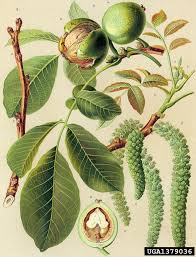
Nothofagaceae belongs to the order Fagales, which is part of the Fabids (Eurosids I) clade within the Rosids. This order includes major temperate forest trees like oaks, birches, and walnuts.
Within Fagales, Nothofagaceae represents a distinct Southern Hemisphere lineage. While previously included in Fagaceae, molecular data strongly supports its status as a separate family. It is considered part of the core Fagales clade, closely related to Fagaceae itself, and perhaps forming a sister group relationship with it, distinct from the Betulaceae/Casuarinaceae clade and the earlier diverging Myricaceae/Juglandaceae clade.
Position in Plant Phylogeny
- Kingdom: Plantae
- Clade: Angiosperms (Flowering plants)
- Clade: Eudicots
- Clade: Rosids
- Clade: Fabids (Eurosids I)
- Order: Fagales
- Family: Nothofagaceae
Evolutionary Significance
Nothofagaceae is highly significant in evolutionary biology and biogeography:
- Gondwanan Biogeography: Its distribution across now-separated Southern Hemisphere landmasses is a textbook example of vicariance resulting from the breakup of Gondwana, providing crucial evidence for continental drift and historical biogeography.
- Phylogeny of Fagales: Its relationship with Fagaceae helps understand the evolution of key traits like the cupule and the diversification of this major order of temperate trees.
- Forest Ecology: As dominant canopy trees, Nothofagus species shape the structure and function of vast temperate forest ecosystems in the Southern Hemisphere.
- Paleobotany: Possesses an extensive fossil record (pollen and macrofossils) dating back to the Late Cretaceous, allowing detailed reconstruction of its evolutionary and biogeographic history, including past presence in Antarctica.