Lentibulariaceae
Bladderwort Family
Lentibulariaceae is a fascinating family of carnivorous flowering plants in the order Lamiales. It comprises three genera – Utricularia (bladderworts), Pinguicula (butterworts), and Genlisea (corkscrew plants) – found worldwide in diverse habitats, especially nutrient-poor wetlands, aquatic environments, and moist terrestrial settings. They are renowned for their highly specialized traps used to capture small invertebrates.
Overview
The Lentibulariaceae family includes about 3 genera and over 350 species, making it the largest family of carnivorous plants. Its members exhibit an incredible range of adaptations to nutrient-poor environments across the globe, from the arctic to the tropics. The three genera represent distinct trapping mechanisms: Utricularia species possess sophisticated suction bladder traps (often underwater or subterranean); Pinguicula species have sticky, glandular leaves that act like flypaper; and Genlisea species employ unique subterranean corkscrew or lobster-pot style traps.
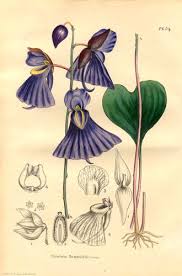
These plants are typically small herbs, lacking woody tissues. Many species of Utricularia and Genlisea lack true roots, instead having modified stems (rhizoids) for anchorage. Pinguicula typically forms basal rosettes of leaves. Despite their often inconspicuous vegetative parts (especially the traps), many Lentibulariaceae produce attractive, often brightly colored, zygomorphic flowers, usually borne on leafless scapes. These flowers often resemble snapdragons or orchids, typically having a 2-lipped corolla and a nectar spur.
Economically, some Pinguicula species are cultivated as ornamentals or curiosities by carnivorous plant enthusiasts. The family is highly significant from a biological standpoint due to the remarkable evolutionary convergence and diversification of carnivorous trapping mechanisms. Phylogenetically, Lentibulariaceae belongs to the order Lamiales, a large group within the Asterid clade (specifically Lamiids) that includes families like Lamiaceae (mints), Plantaginaceae (plantains/snapdragons), and Orobanchaceae (broomrapes, including parasitic plants).
Quick Facts
- Scientific Name: Lentibulariaceae Rich.
- Common Name: Bladderwort Family (also Butterwort Family, Corkscrew Plant Family)
- Number of Genera: 3 (Utricularia, Pinguicula, Genlisea)
- Number of Species: Approximately 360+
- Distribution: Cosmopolitan, especially in nutrient-poor, wet habitats.
- Evolutionary Group: Eudicots - Asterids - Lamiids - Lamiales
Key Characteristics
Growth Form and Habit
Carnivorous herbs (annual or perennial), terrestrial, aquatic (free-floating or attached), or epiphytic. Often growing from rhizomes, stolons, or tubers. True roots often absent (Utricularia, Genlisea) or present (Pinguicula).
Leaves and Traps
Leaves are highly variable and modified into or associated with specialized carnivorous traps:
- Utricularia (Bladderworts): Leaves often highly dissected, filamentous, bearing sophisticated underwater or subterranean suction bladder traps with trigger hairs. Some species also have simple emergent leaves.
- Pinguicula (Butterworts): Leaves typically in basal rosettes, simple, entire, fleshy, covered with stalked mucilage glands (to trap insects) and sessile digestive glands (appearing greasy or 'buttery').
- Genlisea (Corkscrew Plants): Possess two types of subterranean leaves: simple photosynthetic leaves and highly modified, Y-shaped tubular leaves forming downward-pointing corkscrew or lobster-pot traps lined with inwardly pointing hairs to capture soil protozoa and other microorganisms.
Stipules are absent.
Inflorescence
Flowers are borne solitarily or in terminal racemes or simple scapes arising from the vegetative parts.
Flowers
Flowers are bisexual and typically strongly zygomorphic (bilaterally symmetrical). Key features include:
- Calyx: Usually persistent, composed of 2-5 fused or distinct sepals/lobes.
- Corolla: Sympetalous (fused petals), typically bilabiate (2-lipped) with 5 lobes. The lower lip often has a palate closing the throat and usually bears a nectar spur at its base. Colors vary widely (yellow, violet, pink, white, etc.).
- Androecium: Stamens usually 2 (rarely 4), epipetalous (attached to the corolla tube), often included within the corolla.
- Nectar Disc: Usually absent or indistinct.
- Gynoecium: Ovary is superior, composed of 2 fused carpels forming a single locule with free-central or basal placentation and numerous ovules. A single simple style with a often 2-lobed stigma is present.
Fruits and Seeds
The fruit is a capsule, typically globose or ovoid, dehiscing by 2-4 valves, circumscissilely (by a lid), or irregularly. Seeds are usually numerous and small.
Chemical Characteristics
Produce digestive enzymes (proteases, phosphatases, etc.) secreted by glands associated with the traps to break down captured prey. They lack the specific characteristics (e.g., numerous stamens, inferior ovary, woody habit) of Lecythidaceae.
Field Identification
Identifying Lentibulariaceae involves recognizing their carnivorous nature (though traps may be hidden) and distinctive flower structure:
Primary Identification Features
- Habit: Carnivorous herbs (aquatic, terrestrial in wet places, epiphytic).
- Traps: Presence of specialized traps: suction bladders (Utricularia, often on submerged/underground parts), sticky glandular leaves in rosettes (Pinguicula), or subterranean corkscrew traps (Genlisea).
- Flowers: Distinctly zygomorphic (bilaterally symmetrical), often resembling snapdragons or orchids.
- Corolla: Typically 2-lipped and possessing a basal nectar spur.
- Stamens: Usually only 2 stamens.
- Ovary Position: Ovary is superior.
- Habitat: Often found in nutrient-poor environments (bogs, swamps, wet rocks, aquatic habitats).
Secondary Identification Features
- Leaves: Highly variable depending on genus (dissected, simple rosette, modified subterranean).
- Inflorescence: Flowers solitary or in racemes on scapes.
- Fruit: Small capsule.
Seasonal Identification Tips
- Flowering Season: Varies widely by species and climate; flowers are often the most conspicuous part and key to identification.
- Vegetative State: Identifying the genus often possible based on trap type: look for bladders on aquatic/mud-dwelling plants (Utricularia), sticky basal rosettes (Pinguicula), or investigate subterranean structures for corkscrew traps (Genlisea - difficult).
Common Confusion Points
Lentibulariaceae flowers can resemble those of other families, especially within Lamiales:
- Orchidaceae (Orchid family): Orchids also have highly zygomorphic flowers, often with spurs or lips, but belong to Monocots (Asparagales). They typically have 3 sepals and 3 petals (one modified into a labellum), a column fusing stamens and style, and inferior ovaries.
- Scrophulariaceae / Plantaginaceae / Orobanchaceae (Figwort/Plantain/Broomrape families): Many members have zygomorphic, 2-lipped flowers, sometimes spurred (e.g., Linaria - toadflax). They usually have 4 (or 5) stamens (rarely 2), different leaf arrangements, and lack carnivorous traps (though Orobanchaceae includes parasitic plants).
- Gesneriaceae (African Violet family): Often have zygomorphic, spurred flowers, but typically possess 2 or 4 stamens and different leaf/habit characteristics.
- Droseraceae (Sundew family): Another carnivorous family (order Caryophyllales). Sundews (Drosera) trap insects with stalked mucilage glands on their leaves (different from Pinguicula's sessile glands), have actinomorphic flowers with usually 5 petals and 5 stamens.
Field Guide Quick Reference
Look For:
- Carnivorous herbs (aquatic/terrestrial/epiphytic)
- Specialized traps (bladders, sticky leaves, corkscrews)
- Flowers zygomorphic, often spurred
- Corolla 2-lipped
- Usually 2 stamens
- Superior ovary
- Fruit a capsule
Key Variations:
- Trap type (defines genus)
- Flower color and shape
- Habitat (aquatic, terrestrial, epiphytic)
- Leaf form (dissected, simple rosette, subterranean)
Notable Examples
The family comprises three distinct and fascinating genera.

Utricularia vulgaris
Common Bladderwort
A widespread aquatic species found floating in ponds and ditches across the Northern Hemisphere. Has finely dissected underwater leaves bearing numerous small bladder traps to catch tiny aquatic invertebrates. Produces emergent scapes with yellow, spurred, 2-lipped flowers.

Pinguicula moranensis
Mexican Butterwort
A popular cultivated species native to Mexico and Guatemala. Forms rosettes of broad, fleshy leaves covered in sticky glands that trap small insects like gnats. Produces attractive pink to purple flowers with spurs on long scapes.

Genlisea violacea
Violet Corkscrew Plant
A small terrestrial species native to South America, often growing in wet, sandy soils. Has small spatulate leaves above ground and specialized Y-shaped subterranean leaves forming corkscrew traps that capture protozoa. Produces small violet flowers on slender scapes.

Utricularia gibba
Humped Bladderwort
A small, cosmopolitan aquatic or semi-aquatic bladderwort, often found in shallow water or wet mud. Forms tangled mats of fine stems bearing tiny bladders. Produces small yellow flowers, notable for having one of the smallest known angiosperm genomes.
Phylogeny and Classification
Lentibulariaceae is placed in the large order Lamiales, which belongs to the Lamiid clade of Asterids. This order is characterized by a tendency towards zygomorphic flowers, often with fused petals and fewer stamens than petals, and includes many well-known families like Lamiaceae (mints), Verbenaceae (vervains), Plantaginaceae (plantains/snapdragons), Orobanchaceae (broomrapes), and Acanthaceae.
Within Lamiales, Lentibulariaceae occupies a relatively isolated position. Molecular studies suggest it might be sister to the rest of the core Lamiales or part of an early diverging grade. Its exact relationships to other families like Verbenaceae, Bignoniaceae, or Schlegeliaceae are still being fully resolved, but it is clearly nested within the Lamiales order, distinct from other major Asterid orders like Ericales.
Position in Plant Phylogeny
- Kingdom: Plantae
- Clade: Angiosperms (Flowering plants)
- Clade: Eudicots
- Clade: Asterids
- Clade: Lamiids
- Order: Lamiales
- Family: Lentibulariaceae
Evolutionary Significance
Lentibulariaceae is highly significant from an evolutionary perspective:
- Carnivory Evolution: Represents one of the major independent origins of carnivory in flowering plants, showcasing three distinct and highly sophisticated trap mechanisms within a single family.
- Morphological Adaptation: Exhibits extreme morphological adaptations related to carnivory and life in nutrient-poor habitats, including trap structures and often the absence of true roots.
- Genome Evolution: Some species, like Utricularia gibba and Genlisea species, possess remarkably small and dynamic genomes, providing models for studying genome size evolution.
- Phylogenetic Position: Its placement within Lamiales contributes to understanding the diversification of this large Asterid order and the evolution of specialized traits like carnivory and parasitism (seen in related Orobanchaceae).
- Ecological Roles: Plays unique roles in nutrient cycling within aquatic and wetland ecosystems.